
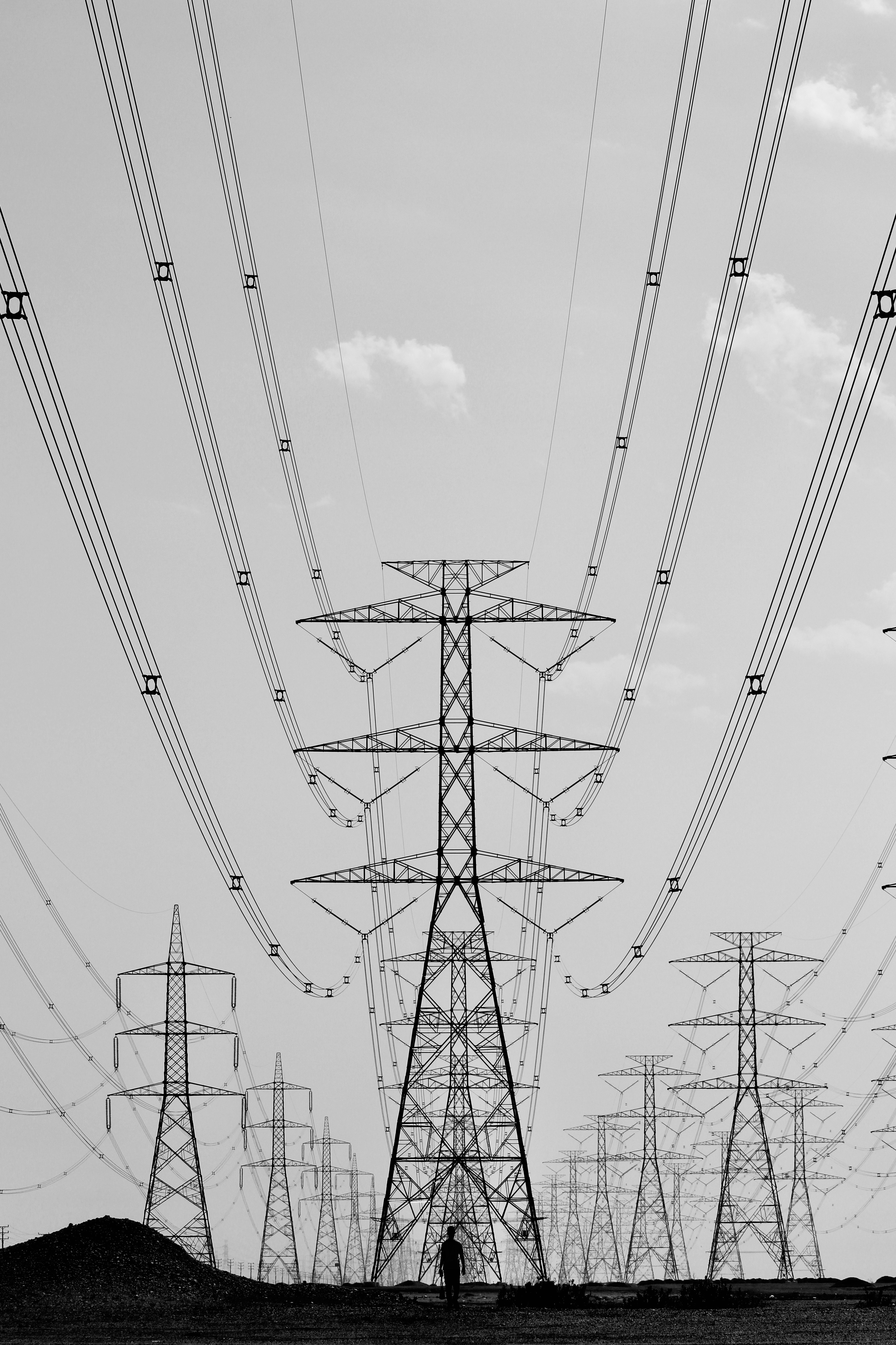
Will Utilities Become AI Stocks? The Unexpected Winners of the Artificial Intelligence Boom
Artificial intelligence is creating enormous new demand for electricity, potentially transforming selected utility companies from traditional defensive investments into critical AI infrastructure plays. As data centers, cloud computing, and high-performance AI systems expand, the utilities that generate, transmit, and distribute electricity may become some of the less obvious beneficiaries of the AI investment cycle.
Semiconductor manufacturers and technology companies remain at the center of the artificial intelligence boom. But every AI processor, server, and data center ultimately depends on one essential resource: electricity.
For long-term investors, this raises an increasingly important question:
Could electric utilities become a new class of AI infrastructure investment?
Why Does Artificial Intelligence Require So Much Electricity?
Artificial intelligence requires substantial amounts of electricity because modern AI systems rely on thousands of high-performance processors operating simultaneously.
Training large language models is computationally intensive, but electricity demand does not stop when training is complete. Once AI models are deployed, inference—the process of answering queries and performing AI tasks—creates continuous computing demand.
Large AI-oriented data centers can require hundreds of megawatts of electricity, while major hyperscale data center campuses can require power capacity approaching the scale traditionally associated with major industrial facilities.
This represents a fundamental change for the utility industry.
For decades, U.S. electricity consumption grew relatively slowly. The rapid expansion of data centers, manufacturing, electrification, and artificial intelligence now has the potential to accelerate electricity demand in several important markets.
For utilities, higher electricity demand can create opportunities for greater investment in generation, transmission, substations, and grid infrastructure.
Why Are Data Centers Important to Utility Companies?
Data centers are becoming the modern equivalent of large industrial customers.
Major technology companies are investing heavily in AI infrastructure, constructing facilities filled with specialized processors, networking equipment, cooling systems, and enormous amounts of computing capacity.
These facilities require something that cannot be delivered digitally:
Reliable electricity, 24 hours a day.
For utilities, large data centers can provide substantial and relatively predictable electricity demand. They can also justify major investments in new transmission lines, substations, generation capacity, and grid modernization.
This matters because regulated utilities generally earn returns on approved infrastructure investments included in their rate base.
If AI-related electricity demand results in larger approved capital programs and expanding rate bases, certain utilities could potentially produce stronger earnings growth than the sector has historically delivered.
Which Utilities Could Benefit Most From AI?
Not every utility will benefit equally from artificial intelligence.
The strongest opportunities are likely to occur where data center construction and electricity demand overlap with utilities capable of expanding their infrastructure profitably.
Investors should pay particular attention to utilities operating in major or emerging data center markets such as:
- Northern Virginia
- Texas
- Georgia
- Arizona
- Parts of the Midwest
These regions can offer combinations of available land, expanding transmission infrastructure, favorable business environments, access to generation, and proximity to major technology investments.
Utilities with significant transmission businesses may also benefit because enormous quantities of electricity must be moved from generation facilities to data centers.
Independent power producers, natural gas infrastructure companies, nuclear operators, and other electricity-related businesses could also participate in the AI power buildout.
The investment opportunity therefore extends beyond traditional regulated utilities.
How Can AI Increase Utility Earnings?
The connection between AI and utility earnings is not simply that data centers consume more electricity.
The larger opportunity may come from infrastructure investment.
Growing electricity demand can require utilities to build:
- New generating capacity
- Transmission lines
- Electrical substations
- Grid interconnections
- Energy storage
- Distribution infrastructure
- Grid modernization projects
For regulated utilities, approved investments can increase the company's rate base—the assets upon which regulators generally allow the utility to earn an authorized return.
That creates a potential cycle:
AI growth → Data center construction → Higher electricity demand → Infrastructure investment → Rate-base growth → Potential earnings growth
This is one of the most important relationships for investors evaluating utilities as AI investments.
Why Could Utilities Be the "Picks and Shovels" of AI?
During major economic expansions, some of the most durable investment opportunities have come from companies supplying the infrastructure required by the boom rather than from the companies producing the final product.
Railroads helped enable industrialization.
Telecommunications networks helped enable the internet.
Semiconductors and cloud infrastructure enabled modern computing.
Electricity infrastructure may play a similar role in artificial intelligence.
AI companies can design increasingly powerful models, but those models cannot operate without enormous amounts of reliable electricity.
From this perspective, selected utilities may represent another layer of the "picks and shovels" AI investment strategy.
They do not need to develop the winning AI model.
They need to provide the electricity that allows the AI economy to operate.
Are Utility Stocks Still Dividend Investments?
Yes—but the investment thesis may be evolving.
Utilities have traditionally appealed to investors because of their relatively predictable cash flows, defensive characteristics, and dividends.
Historically, investors generally accepted slower growth in exchange for stability and income.
Artificial intelligence could potentially alter that equation for utilities located in high-growth electricity markets.
A utility capable of maintaining its dividend while simultaneously benefiting from expanding electricity demand and rate-base growth could offer investors an unusual combination of:
Income + Stability + Infrastructure Growth
That does not mean utilities should be valued like semiconductor or software companies. Their economics, regulation, capital requirements, and growth profiles remain very different.
But some utilities may deserve higher growth expectations than their historical classifications suggest.
What Are the Risks of Investing in Utilities for AI Growth?
Investors should not assume that every utility automatically becomes an AI stock simply because electricity demand is increasing.
Several important risks remain.
Regulation: Utilities generally require regulatory approval for major investments and customer rate increases. Increased capital spending does not automatically translate into higher shareholder returns.
Capital requirements: Power plants, transmission lines, substations, and other infrastructure can require billions of dollars and years to construct.
Debt and interest rates: Utilities are capital-intensive businesses that frequently carry substantial debt. Higher financing costs can reduce the economic benefit of new investment.
Power availability: Some markets may face difficulty connecting new data centers because generation and transmission infrastructure cannot expand quickly enough.
Technology efficiency: AI processors and data centers are likely to become more energy efficient. Improvements in computing efficiency could reduce electricity consumption per unit of computing power.
AI investment risk: Current data center spending assumes continued rapid AI adoption. If that growth slows, future electricity demand could fall below expectations.
These factors make company selection particularly important.
What Should Investors Watch?
Investors evaluating utilities as AI infrastructure investments should monitor several indicators.
Electricity demand forecasts: Are utilities consistently raising their expectations for future load growth?
Data center commitments: Are hyperscalers and data center developers announcing significant projects inside the utility's service territory?
Capital expenditure plans: Is the utility increasing investment in generation, transmission, substations, and grid modernization?
Rate-base growth: Is infrastructure spending translating into an expanding regulated asset base?
Regulatory environment: Are regulators allowing utilities to earn reasonable returns on infrastructure investments?
Balance-sheet strength: Can the company finance its growth without creating excessive debt or shareholder dilution?
Dividend growth: Is increased investment ultimately producing stronger cash flows and sustainable dividend growth?
Together, these factors can help distinguish genuine AI-related utility opportunities from companies merely benefiting from the broader investment narrative.
Could Utilities Become AI Stocks?
Selected utilities could increasingly function as AI infrastructure investments, but the opportunity will not apply equally across the sector.
The companies most likely to benefit will be those operating in regions experiencing substantial data center development while possessing the generation capacity, transmission infrastructure, regulatory relationships, and financial strength necessary to accommodate that growth.
Artificial intelligence may therefore reshape an industry investors have traditionally viewed as slow-growing and defensive.
Utilities are unlikely to replace semiconductor companies or software developers as the public face of the AI revolution.
But they may provide something equally important:
The physical infrastructure that makes the AI revolution possible.
The Owls Nest Capital Perspective
At Owls Nest Capital, we believe some of the most compelling long-term investment opportunities can be found by looking beyond the obvious beneficiaries of a major technological shift.
Artificial intelligence is not simply a software story.
It is also a semiconductor story, a data center story, a networking story, a cooling story, and increasingly, an electricity infrastructure story.
The investment question is therefore not simply:
Which companies will build the best artificial intelligence?
Investors should also ask:
Which companies own the infrastructure the AI economy cannot function without?
Electric utilities increasingly belong in that conversation.
The ultimate winners will likely be those capable of converting rising electricity demand into sustained infrastructure investment, expanding earnings, strong balance sheets, and long-term shareholder returns.
For patient investors, that could make some of the companies that have powered the economy for more than a century unexpected participants in one of the most important technological transformations of the modern era.
---
Owls Nest Capital is a single-family office. This article is provided for informational and educational purposes only and does not constitute investment advice or a recommendation to buy or sell any security.