
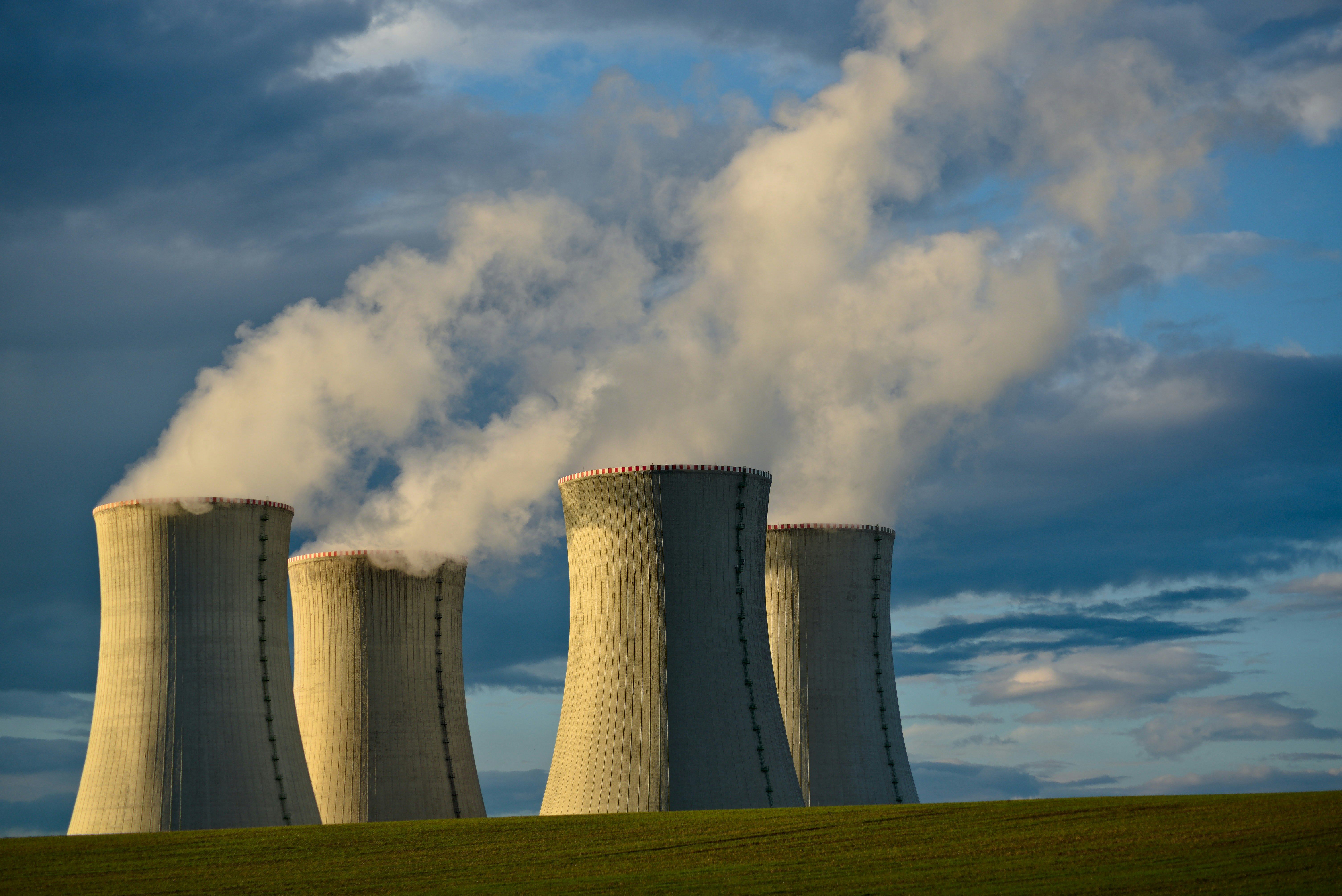
Why AI Is Reviving Nuclear Power: The Next Energy Infrastructure Opportunity
Artificial intelligence is helping revive interest in nuclear power because AI data centers require enormous amounts of reliable, around-the-clock electricity. Nuclear energy can provide large-scale, dependable, low-carbon power, making it increasingly relevant to technology companies building the next generation of AI infrastructure.
Artificial intelligence is transforming industries at an extraordinary pace, but one of its more surprising potential beneficiaries is an industry many investors had largely written off: nuclear power.
For decades, nuclear energy struggled with aging infrastructure, political opposition, high construction costs, lengthy development timelines, and competition from inexpensive natural gas and renewable energy.
Artificial intelligence is changing the equation.
As technology companies race to build the computing capacity required for increasingly sophisticated AI systems, access to reliable electricity is becoming a strategic resource.
This raises an important investment question:
Could artificial intelligence help drive a long-term nuclear power renaissance?
Why Does AI Need So Much Electricity?
Modern artificial intelligence requires enormous computing power.
Training large language models and operating cloud-based AI services can require thousands of specialized processors running continuously inside massive data centers.
And training is only part of the electricity requirement.
Once an AI model is deployed, it performs inference—the process of generating responses, analyzing information, creating images, operating applications, and performing other AI tasks.
As AI adoption expands across businesses and consumers, inference creates continuous computing—and therefore electricity—demand.
The AI infrastructure equation increasingly looks like this:
Semiconductors + Data Centers + Networking + Cooling + Electricity = AI Computing Capacity
Without sufficient electricity, the rest of that infrastructure cannot operate effectively.
Why Is Nuclear Power Attractive for AI Data Centers?
Nuclear power offers several characteristics that align particularly well with AI infrastructure.
Reliability
Nuclear plants can operate continuously for long periods and historically achieve very high capacity factors.
That matters because AI data centers operate around the clock.
Scale
Large nuclear facilities can produce substantial quantities of electricity from relatively concentrated sites.
As individual AI campuses require increasingly large amounts of power, access to large-scale generation becomes strategically important.
Low Operational Carbon Emissions
Many of the world's largest technology companies have significant carbon-reduction commitments.
Nuclear generation provides electricity with very low operational carbon emissions while also offering the reliability required by large data centers.
Existing Infrastructure
Existing nuclear facilities already have grid connections, transmission infrastructure, operating expertise, and regulatory frameworks.
Those assets can become increasingly valuable if electricity demand rises substantially.
Together, these characteristics explain why nuclear power has returned to the AI infrastructure discussion.
Why Can't AI Data Centers Rely Only on Wind and Solar?
Renewable energy will almost certainly remain an important component of future electricity generation.
However, AI data centers require electricity 24 hours a day, seven days a week.
Solar generation declines at night, while wind generation varies with weather conditions.
Battery storage can help balance these fluctuations, and continued advances in storage technology could increase its importance.
This does not necessarily make nuclear power a replacement for renewable energy.
Instead, the future grid may rely on a combination of:
Nuclear + Natural Gas + Renewables + Energy Storage + Expanded Transmission
The precise mix will vary by geography, economics, regulation, and available infrastructure.
Why Are Technology Companies Interested in Nuclear Power?
Technology companies increasingly recognize that access to computing capacity depends on access to electricity.
As AI investment expands, major technology companies are pursuing long-term strategies to secure dependable power.
Nuclear energy is receiving renewed attention because it offers both reliability and low-carbon generation.
This represents an important shift.
Historically, technology companies purchased electricity primarily as customers.
Increasingly, the largest technology companies are becoming active participants in determining where their future electricity will come from.
That makes energy strategy part of AI strategy.
What Are Small Modular Reactors?
Much of the investment excitement surrounding nuclear power centers on Small Modular Reactors, or SMRs.
SMRs are advanced nuclear reactors designed to be smaller than traditional large nuclear plants.
Developers hope standardized designs and modular construction can eventually reduce construction complexity, improve deployment flexibility, and potentially lower costs.
Rather than building one enormous nuclear facility, SMRs could theoretically allow utilities or industrial customers to add generating capacity in smaller increments.
That concept could eventually prove attractive for AI data center campuses, industrial facilities, utilities, military installations, and large manufacturing operations.
However, investors should distinguish between technological potential and commercial reality.
Many SMR developers remain early-stage companies. Regulatory approval, financing, manufacturing, construction, and commercial execution remain substantial hurdles.
Could SMRs Power AI Data Centers Directly?
Potentially, although widespread deployment remains uncertain.
The long-term vision is compelling: locate reliable nuclear generation near large electricity consumers and reduce dependence on constrained regional grids.
For AI data centers, this could potentially provide reliable around-the-clock electricity, long-term power visibility, lower operational carbon emissions, reduced exposure to grid constraints, and dedicated generation capacity.
But significant challenges remain.
Nuclear facilities require extensive licensing and regulatory oversight. Projects require substantial capital, and commercial SMR deployment is still developing.
SMRs therefore represent a potentially important long-term AI infrastructure opportunity, but also one of the higher-risk areas within the nuclear investment theme.
How Can Investors Participate in the AI Nuclear Theme?
The investment opportunity extends considerably beyond companies developing nuclear reactors.
The broader nuclear ecosystem includes:
- Regulated utilities owning nuclear plants
- Independent nuclear power producers
- Uranium miners
- Uranium enrichment and fuel-cycle companies
- Nuclear engineering companies
- Reactor manufacturers
- Specialized component suppliers
- Electrical equipment manufacturers
- Nuclear maintenance providers
- Advanced reactor developers
This is important because the companies receiving the most publicity are not necessarily the companies with the strongest economics.
Some established businesses may benefit from increased nuclear investment without assuming the technological and regulatory risks faced by early-stage reactor developers.
Could Uranium Benefit From AI Growth?
Potentially.
If nuclear generation expands meaningfully, reactors will require additional nuclear fuel.
The relationship can be viewed as:
More AI → More electricity demand → Greater nuclear interest → Potential reactor growth → Greater nuclear fuel demand
However, uranium is a commodity and remains subject to supply cycles, geopolitical considerations, production economics, inventories, and changes in nuclear policy.
Investors should therefore distinguish between the long-term nuclear demand thesis and shorter-term movements in uranium prices.
What Are the Risks of Investing in Nuclear Power?
The nuclear opportunity is significant, but so are the risks.
Construction risk: Large nuclear projects have historically experienced delays and cost overruns.
Regulatory risk: Nuclear projects face extensive licensing, safety, and environmental requirements.
Capital intensity: Building reactors requires substantial amounts of capital.
Political risk: Nuclear policy can change with governments and public sentiment.
Technology risk: Advanced reactor designs and SMRs must demonstrate commercial viability.
Competition: Natural gas, renewable energy, battery storage, and future energy technologies will compete with nuclear generation.
AI efficiency: Improvements in processors, cooling systems, and AI models could reduce electricity required per computation.
Valuation: Companies associated with both AI and nuclear power can attract substantial investor enthusiasm, potentially pushing valuations ahead of underlying fundamentals.
Investors should therefore avoid assuming that every nuclear company will become an AI winner.
What Should Nuclear Investors Watch?
Several indicators can help determine whether the AI-driven nuclear thesis is developing into a durable investment cycle.
Data center electricity demand: Are forecasts continuing to increase?
Technology company power agreements: Are hyperscalers signing additional long-term nuclear contracts?
Existing reactor life extensions: Are utilities extending the operating lives of current nuclear plants?
Reactor restarts: Are previously closed facilities being considered for renewed operation?
SMR regulatory progress: Are advanced reactor developers moving successfully through licensing?
Construction announcements: Are proposed reactors actually receiving financing and moving toward construction?
Uranium supply: Is fuel production keeping pace with potential reactor demand?
Nuclear capital expenditures: Are utilities, governments, and technology companies committing actual capital rather than simply announcing plans?
The distinction between announcements and deployed capital will be particularly important.
Is Nuclear Power Becoming a "Picks and Shovels" AI Investment?
Potentially.
Artificial intelligence is frequently described as a software revolution, but its physical infrastructure requirements are enormous.
AI needs semiconductors to perform calculations.
It needs fiber networks to move information.
It needs cooling systems to manage heat.
It needs data centers to house the equipment.
And it needs electricity to power everything.
Nuclear power could become one of several energy sources supporting that infrastructure.
This creates an investment opportunity beyond the companies developing AI models themselves.
Investors can also examine the businesses supplying resources that the AI economy cannot operate without.
The Owls Nest Capital Perspective
At Owls Nest Capital, we believe one of the more interesting aspects of artificial intelligence is how it is transforming industries that historically had little connection to technology investing.
Nuclear energy is an excellent example.
AI is effectively connecting two investment themes that once appeared largely unrelated:
Digital computing and physical energy infrastructure.
The massive capital investment flowing into artificial intelligence does not stop with semiconductors.
It moves outward through an expanding infrastructure ecosystem:
Semiconductors → Data Centers → Fiber Networks → Cooling → Electricity → Power Generation → Grid Infrastructure
Nuclear power sits within that chain.
For long-term investors, the important question is not simply whether nuclear energy will experience renewed growth.
The more useful questions are:
Which companies already possess valuable nuclear assets?
Which companies provide essential equipment and services to the industry?
Which advanced reactor technologies can realistically reach commercial deployment?
Which businesses have strong enough balance sheets to survive the long development cycle?
And ultimately:
Which companies can convert AI-driven electricity demand into sustainable earnings and shareholder returns?
Artificial intelligence may not single-handedly create a nuclear renaissance.
But by dramatically increasing the value of reliable electricity, AI has given the nuclear industry something it has lacked for decades:
A powerful new source of long-term demand.
That makes nuclear energy increasingly difficult for long-term AI infrastructure investors to ignore.
Nuclear power is one part of the larger infrastructure buildout required to support artificial intelligence. AI's Massive Electricity Appetite: Can the Power Grid Keep Up? examines the broader challenge of supplying AI data centers with enough power, while Why Fiber Optics Could Be One of AI's Biggest Infrastructure Winners explores the high-speed networks needed to connect AI computing infrastructure.
Learn more about our long-term investment approach at Owls Nest Capital.
---
Owls Nest Capital is a single-family office. This article is provided for informational and educational purposes only and does not constitute investment advice or a recommendation to buy or sell any security.