
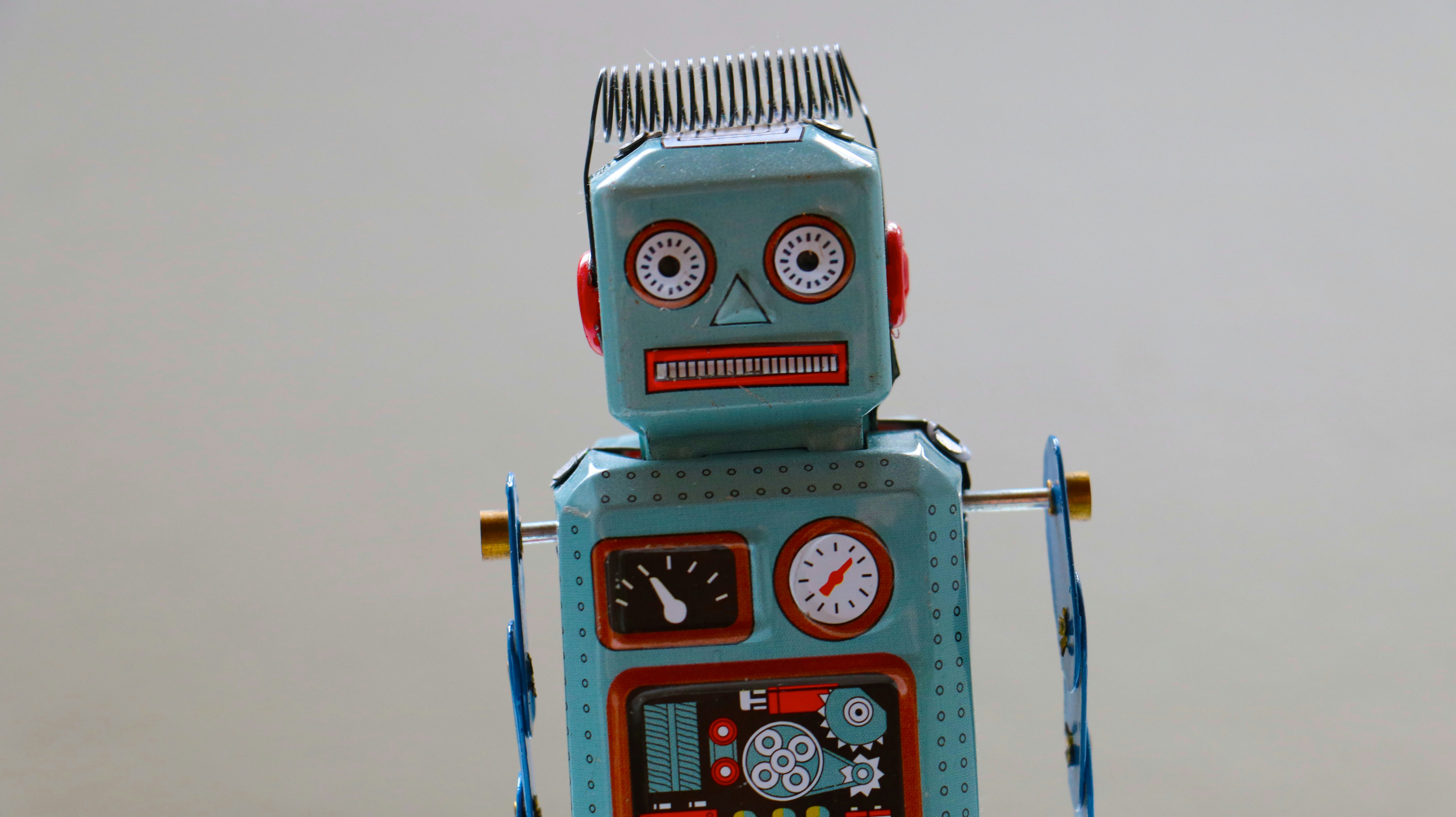
AI-Powered Trading Bots: The Future of Automated Investing
Financial markets have always rewarded investors who can interpret information, evaluate risk, and make disciplined decisions. Today, artificial intelligence is introducing new capabilities into this process through automated trading systems capable of analyzing financial data and executing transactions with remarkable speed.
AI-powered trading bots are becoming an increasingly visible part of the financial technology landscape.
These systems can monitor market conditions, identify statistical patterns, process financial news, and generate trading signals without requiring continuous human involvement.
Some are designed to execute thousands of transactions. Others focus on portfolio rebalancing, risk monitoring, or identifying longer-term investment opportunities.
However, the ability to automate financial decisions raises an important question.
Does more sophisticated technology necessarily lead to better investment performance?
At Owls Nest Capital, we believe artificial intelligence can improve financial analysis and operational efficiency, but successful investing still depends on sound strategy, disciplined risk management, and a realistic understanding of uncertainty.
Trading bots represent an important technological development. They should not be mistaken for a guaranteed method of generating investment returns.
The Evolution of Automated Trading
Automated trading predates modern artificial intelligence.
For decades, institutional investors have used computer programs to execute transactions according to predefined rules.
Early systems relied on relatively straightforward instructions.
A trading program might purchase a security when its price crossed a moving average or sell when a predetermined risk threshold was reached.
As computing technology advanced, automated trading systems became more sophisticated.
Modern platforms can evaluate multiple market variables, monitor numerous securities, and execute complex strategies simultaneously.
Artificial intelligence adds another layer of capability.
Instead of relying exclusively on fixed instructions, certain systems use machine learning to identify relationships within historical data and apply those models to new market conditions.
This distinction is important.
Not every automated trading program is an AI-powered trading bot.
Some rely entirely on conventional rules-based algorithms.
How AI-Powered Trading Bots Work
An AI-powered trading bot generally combines several components.
These may include:
1. Market data collection.
2. Data processing and validation.
3. Predictive or classification models.
4. Trading signal generation.
5. Risk management rules.
6. Order execution.
7. Performance monitoring.
The system receives market information, evaluates that information according to its programmed methodology, and determines whether predefined conditions justify a transaction.
Depending on its design, the bot may automatically execute an order or generate a recommendation requiring human approval.
A Hypothetical Trading Example
Consider an automated system monitoring a group of large-cap technology stocks.
The system evaluates price momentum, trading volume, earnings revisions, and market volatility.
When certain conditions are satisfied, it generates a purchase signal.
Before executing the trade, the risk management component checks:
- Maximum position size.
- Available liquidity.
- Portfolio concentration.
- Expected transaction costs.
- Current market volatility.
If the proposed transaction exceeds a risk limit, the system may reduce the order or reject it entirely.
This illustrates an important principle.
A trading signal and a sound investment decision are not necessarily the same thing.
Risk controls must be integrated into the execution process.
Machine Learning: Finding Patterns in Financial Data
Machine learning is one of the primary technologies used in AI-assisted trading.
These models analyze historical datasets to identify relationships among variables.
For example, a model might evaluate whether changes in trading volume, volatility, and market momentum have historically preceded certain price movements.
Common techniques include:
- Decision trees.
- Random forests.
- Gradient boosting.
- Neural networks.
- Statistical classification models.
- Reinforcement learning.
Each approach has advantages and limitations.
A model that performs well during a sustained bull market may struggle during a period of rising interest rates or declining liquidity.
Financial markets are dynamic systems.
Historical relationships can weaken as economic conditions change or competing investors exploit similar opportunities.
Consequently, machine learning does not guarantee predictive accuracy.
Natural Language Processing and Trading Signals
Natural language processing, commonly called NLP, allows computers to analyze written and spoken language.
Financial markets produce enormous quantities of textual information.
Examples include:
- Corporate earnings reports.
- Management conference calls.
- Regulatory filings.
- Central bank announcements.
- Economic news.
- Industry research.
- Social media commentary.
An AI system can analyze these sources to identify changes in sentiment, management language, or economic expectations.
An Earnings Announcement Example
Imagine a publicly traded company reporting quarterly results.
Its revenue exceeds analyst expectations, but management lowers its forecast for the following year.
An NLP model might identify the negative forward guidance despite the positive headline earnings result.
The system could then incorporate this information into its trading analysis.
However, interpreting language is not equivalent to forecasting market reactions.
Investors may already anticipate weaker guidance, and a stock's response depends on how the announcement compares with existing expectations.
NLP can improve information processing, but it cannot eliminate uncertainty.
Reinforcement Learning and Adaptive Trading
Reinforcement learning is a machine learning approach in which a model learns through interactions with an environment and receives feedback based on defined outcomes.
In financial applications, researchers may use reinforcement learning to investigate trading decisions, portfolio allocation, or order execution.
A model might receive positive feedback for achieving favorable risk-adjusted results and negative feedback for excessive trading costs or risk exposure.
However, reinforcement learning introduces substantial challenges.
Financial markets provide noisy feedback.
A profitable transaction does not necessarily indicate that the underlying decision was sound.
Likewise, a losing transaction does not always indicate that the model made an unreasonable decision.
Training these systems requires carefully designed objectives, realistic simulations, and rigorous testing.
A model that performs well in a simulated environment may behave very differently in live financial markets.
The Advantages of AI-Powered Trading Bots
Automated trading systems can offer meaningful operational benefits.
Speed and Efficiency
Bots can process information and execute programmed instructions faster than human traders.
This can be valuable when market conditions change rapidly.
Consistent Execution
Automated systems can follow predefined trading rules without fatigue or impulsive decision-making.
However, poorly designed rules can produce consistently poor outcomes.
Expanded Market Monitoring
A single system may monitor hundreds or thousands of securities simultaneously.
Reduced Manual Work
Automation can simplify repetitive tasks involving order placement, data collection, and portfolio monitoring.
Systematic Risk Controls
Trading bots can enforce position limits, exposure thresholds, and other predefined safeguards.
Continuous Monitoring
Automated systems can monitor markets during their operating hours without requiring constant human attention.
Certain markets, including cryptocurrency markets, operate continuously. U.S. stock trading hours and available extended-hours sessions depend on the trading venue and brokerage.
These advantages can improve efficiency.
They do not automatically produce higher returns.
Can AI Trading Bots Consistently Beat the Market?
This is one of the most important questions for investors evaluating automated trading systems.
The answer is that consistent outperformance is difficult to demonstrate and even harder to sustain.
A trading strategy must overcome several obstacles:
- Transaction costs.
- Bid-ask spreads.
- Market impact.
- Taxes.
- Model errors.
- Changing economic conditions.
- Competition from other sophisticated traders.
An AI model may identify a historical pattern that appears profitable.
But once the pattern becomes widely recognized, competing market participants may reduce or eliminate the opportunity.
Furthermore, strong historical results may reflect overfitting rather than genuine predictive ability.
Investors should be particularly skeptical of trading platforms advertising guaranteed profits, unusually high returns, or minimal risk.
No legitimate trading system can eliminate the possibility of financial loss.
Understanding Backtesting and Performance Claims
Backtesting involves evaluating a trading strategy using historical market data.
It can be useful for determining how a methodology might have performed under past conditions.
However, backtesting has important limitations.
Look-Ahead Bias
A model may inadvertently use information that would not have been available when a historical trade occurred.
Survivorship Bias
A dataset may exclude companies that failed or were removed from an index.
Overfitting
A model may be excessively optimized for historical conditions.
Unrealistic Execution Assumptions
Simulated results may assume transactions occur at favorable prices without accounting for slippage or liquidity.
Ignored Costs
A backtest may exclude commissions, spreads, borrowing costs, and taxes.
Changing Market Conditions
Historical relationships may not persist.
Investors evaluating a trading bot should seek independently verifiable live performance rather than relying exclusively on simulated returns.
Even audited historical results cannot guarantee future outcomes.
The Hidden Costs of Automated Trading
Trading automation can reduce certain operational expenses while introducing others.
Potential costs include:
- Software subscriptions.
- Brokerage commissions and fees.
- Market data access.
- Cloud computing.
- API connectivity.
- Bid-ask spreads.
- Execution slippage.
- Financing expenses.
- Tax liabilities.
Consider a hypothetical strategy generating a 12% annual gross return.
If transaction costs, spreads, platform expenses, and execution losses total 4% of invested capital annually, the simplified return before taxes falls to 8%.
That difference can materially affect long-term results.
Frequent trading may also generate short-term capital gains in taxable accounts.
For U.S. investors, short-term gains are generally taxed at ordinary income tax rates.
Evaluating after-cost and after-tax performance is essential.
Risk Management in Automated Trading
Risk management is not an optional feature of a trading bot.
It is central to the system's reliability.
Important safeguards may include:
Position Limits
Restricting the percentage of capital allocated to individual securities or strategies.
Portfolio Exposure Limits
Monitoring concentration across sectors, industries, and correlated assets.
Maximum Loss Thresholds
Establishing conditions under which trading activity is reduced or suspended.
Liquidity Controls
Avoiding orders that are too large relative to available market liquidity.
Execution Monitoring
Identifying unusual order behavior, rejected transactions, or unexpected fills.
Emergency Shutdown Procedures
Providing a mechanism to disable automated execution when systems behave unexpectedly.
Independent Oversight
Reviewing model performance and operational activity rather than assuming automation will function correctly indefinitely.
Even sophisticated safeguards cannot guarantee protection during extreme market events.
Stop orders, for example, may execute at prices significantly different from their trigger levels during periods of low liquidity or rapid price movements.
Cybersecurity and the Risks of Trading Bot Platforms
Automated trading systems may require access to brokerage accounts, exchange connections, or financial data.
This creates important cybersecurity considerations.
Investors should evaluate:
- Whether a platform is reputable.
- How account credentials are stored.
- Whether multifactor authentication is supported.
- What permissions are granted through APIs.
- Whether withdrawal permissions can be disabled.
- How trading activity is monitored.
- Whether the platform provides clear documentation.
- Whether independent performance information is available.
Investors should avoid sharing brokerage passwords with unverified services.
Where supported, restricted API permissions can reduce exposure.
Any platform promising guaranteed returns or requesting unusual access to investor funds deserves heightened scrutiny.
AI Trading Bots Versus Robo-Advisors
Trading bots and robo-advisors are often discussed together, but they serve different purposes.
| Feature | AI Trading Bots | Robo-Advisors |
|---|---|---|
| Primary objective | Execute trading strategies | Manage investment portfolios |
| Typical time horizon | Short to intermediate term | Generally long term |
| Trading frequency | Can be frequent | Usually periodic or rules-driven |
| Investment approach | Signals and execution models | Goal-based asset allocation |
| Risk management | Trade and strategy controls | Diversification and rebalancing |
| Human involvement | Depends on system design | Generally limited after setup |
Some trading bots operate without machine learning, and many robo-advisors use conventional algorithms rather than advanced AI.
For investors focused on retirement and long-term wealth accumulation, diversified portfolio management may be more relevant than high-frequency automated trading.
How AI Can Help Long-Term Investors Without Trading Automatically
The benefits of artificial intelligence extend far beyond automated transactions.
For investors who prefer long-term ownership, AI can assist with research and monitoring.
Fundamental Analysis
AI tools can help compare revenue growth, profitability, debt levels, and free cash flow across companies.
Dividend Monitoring
Automated systems can track dividend announcements, payout ratios, and changes in financial conditions.
Portfolio Concentration Analysis
AI-assisted tools can identify overlapping holdings and exposure to common economic factors.
Valuation Research
Models can organize historical valuation data and compare different earnings scenarios.
Risk Assessment
AI systems can help evaluate sensitivity to interest rates, economic conditions, and market volatility.
Investment Research Organization
AI can summarize financial filings, earnings transcripts, and industry developments for further verification.
These applications may improve investment decision-making without requiring investors to surrender control over trading activity.
The Difference Between Trading Speed and Investment Value
Short-term trading systems frequently attempt to profit from changes in market prices.
Long-term investors focus more heavily on changes in business value.
Consider a company that increases earnings and free cash flow consistently over many years.
Its long-term investment performance may be influenced by:
- Revenue expansion.
- Improving profitability.
- Competitive advantages.
- Capital allocation.
- Dividend growth.
- Valuation changes.
These economic factors can matter more over a decade than short-term trading signals.
A sophisticated algorithm might execute hundreds of transactions involving the company's shares.
A long-term investor might purchase the business at an attractive valuation and hold it while its economic value grows.
Both approaches involve risk.
However, they seek returns through fundamentally different mechanisms.
At Owls Nest Capital, we believe understanding the underlying business remains essential regardless of how advanced financial technology becomes.
The Future of AI-Powered Trading Bots
Artificial intelligence will likely continue expanding the capabilities of automated trading systems.
Several developments deserve attention.
More Advanced Predictive Models
Improved machine learning techniques may help analyze increasingly complex financial datasets.
Explainable AI
Greater transparency may help investors understand why trading systems generate specific recommendations.
Integrated Financial Research
Trading systems may combine market data, corporate disclosures, economic information, and alternative datasets more effectively.
Personalized Risk Controls
Automated strategies may become more adaptable to individual investment objectives and risk constraints.
Improved Execution Technology
Algorithms may become more sophisticated at evaluating liquidity and reducing transaction costs.
Stronger Model Governance
As automated trading becomes more widespread, testing, monitoring, cybersecurity, and accountability will remain essential.
These developments may improve system capabilities.
However, greater technological competition may also make sustainable trading advantages more difficult to maintain.
The Owls Nest Capital Perspective
At Owls Nest Capital, we believe artificial intelligence has an important role in the future of investment research and financial decision-making.
AI-powered trading bots demonstrate the remarkable capabilities of modern computing.
They can analyze information rapidly, identify statistical relationships, and execute complex instructions.
However, investment success should not be measured by technological complexity or trading frequency alone.
Our investment philosophy emphasizes long-term ownership, business fundamentals, sustainable cash flow, diversification, and disciplined capital allocation.
We believe artificial intelligence is particularly valuable when used to strengthen research, evaluate risks, and improve the quality of investment decisions.
Technology can enhance the investment process.
It cannot replace sound judgment, patience, or an understanding of the businesses in which capital is invested.
Frequently Asked Questions About AI Trading Bots
What is an AI-powered trading bot?
An AI-powered trading bot is software that uses artificial intelligence techniques to analyze financial information, generate trading signals, or assist with automated transaction execution.
Do AI trading bots actually work?
Some automated trading strategies can operate successfully under certain market conditions. However, profitability depends on model quality, risk management, execution costs, and changing market conditions. Results are not guaranteed.
Can AI trading bots guarantee profits?
No. Financial markets involve uncertainty, and automated trading systems can experience substantial losses. Guaranteed-profit claims should be treated with skepticism.
Are AI trading bots legal?
Automated trading is generally permitted in many financial markets, subject to applicable laws, brokerage rules, exchange requirements, and restrictions on prohibited activities such as market manipulation.
Can beginners use AI trading bots?
Some platforms are marketed to beginners, but automated trading introduces risks involving strategy design, software reliability, and account security. Investors should understand these risks before granting trading permissions.
What is the difference between AI trading bots and algorithmic trading?
Algorithmic trading uses programmed instructions to execute transactions. AI trading bots incorporate artificial intelligence techniques into some portion of the analysis, decision-making, or execution process.
Are AI trading bots better than long-term investing?
Neither approach guarantees success. Automated trading generally seeks returns through trading strategies, while long-term investing emphasizes business performance and compounding. The appropriate approach depends on investment objectives, expertise, costs, and risk tolerance.
Can AI improve a long-term investment portfolio?
Yes. AI can assist with financial analysis, portfolio monitoring, dividend research, valuation comparisons, and risk assessment without requiring frequent trading.
Final Thoughts: Automation Is Not a Substitute for Investment Discipline
AI-powered trading bots represent a significant advancement in financial technology.
Their ability to process large amounts of information, identify statistical relationships, and execute transactions automatically is changing how financial markets operate.
But technological sophistication does not guarantee investment success.
The most effective use of artificial intelligence may be improving how investors analyze businesses, assess risks, and allocate capital rather than simply increasing trading activity.
At Owls Nest Capital, we believe the future of investing will combine advanced analytical capabilities with the enduring principles of fundamental research, disciplined risk management, and long-term ownership.
Artificial intelligence can make the investment process more sophisticated.
Sound judgment determines how effectively that technology is used.
Investing in tomorrow, building today.
Disclaimer: This article is intended for educational and informational purposes only and does not constitute personalized investment, legal, or tax advice. Automated and AI-assisted trading involve substantial risks, including the possible loss of principal. Historical and hypothetical performance do not guarantee future results.