
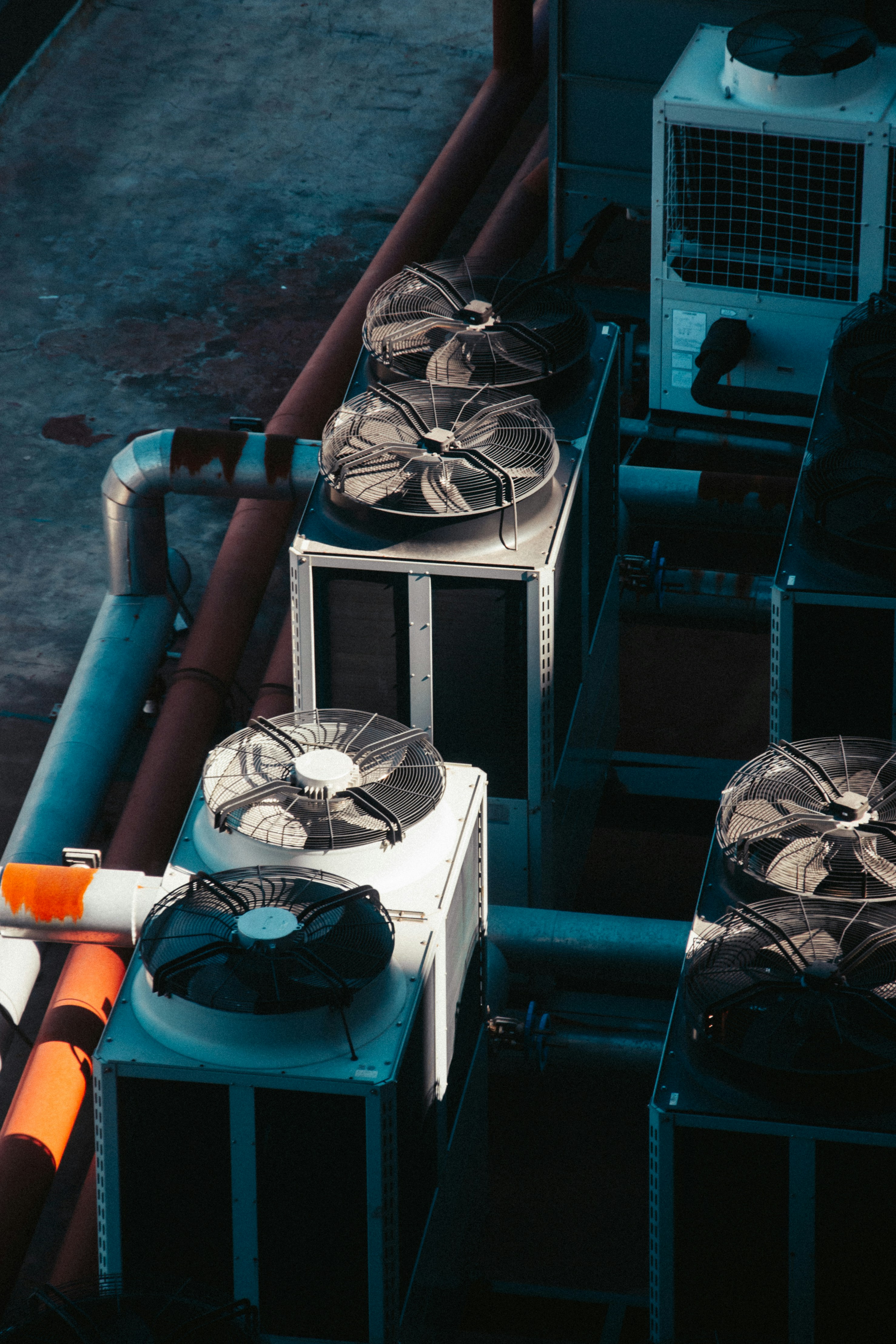
Data Center Cooling: Why Thermal Management Could Become a Critical Growth Industry
Artificial intelligence is increasing computing power, electricity consumption, and heat generation. Managing that heat may become one of the most important infrastructure challenges of the AI economy.
Artificial intelligence is creating enormous demand for computing infrastructure.
Technology companies are investing heavily in advanced processors, high-speed networking, data centers, and electricity generation.
Much of the investment discussion focuses on semiconductor manufacturers such as Nvidia, Broadcom, and Marvell.
However, another industry is becoming increasingly important to the development of artificial intelligence.
Thermal management.
Every processor consumes electricity and generates heat.
As computing systems become more powerful, managing that heat becomes increasingly challenging.
Excessive temperatures can reduce computing performance, shorten equipment life, and increase the risk of system failures.
For data center operators, cooling is not simply a supporting service.
It is an essential component of reliable computing infrastructure.
The growing use of high-density AI servers is creating demand for advanced cooling technologies, including liquid cooling, direct-to-chip systems, immersion cooling, and sophisticated heat rejection equipment.
This transition may create substantial opportunities for companies supplying the equipment and services required to operate modern data centers.
For long-term investors, thermal management represents an important segment of the broader AI infrastructure investment opportunity.
1. Why AI Is Changing Data Center Cooling
Traditional data centers have relied heavily on air cooling.
Fans move air through server equipment, while cooling systems remove heat from the facility.
This approach remains effective for many computing environments.
However, AI workloads are changing the physical requirements of data centers.
Advanced AI processors can consume substantial amounts of electricity.
Large computing clusters may contain thousands of processors operating simultaneously.
As power consumption increases, heat generation also increases.
The Relationship Between Electricity and Heat
Nearly all electricity consumed by computing equipment eventually becomes heat within the facility.
This creates a direct relationship between computing power and thermal management requirements.
For example, a server rack consuming 20 kilowatts generates approximately 20 kilowatts of heat.
A rack consuming 100 kilowatts generates approximately 100 kilowatts of heat.
The amount of heat that must be removed increases with electrical consumption.
However, the cooling system's energy requirements depend on its design, operating conditions, and efficiency.
Why Rack Density Matters
Rack density measures how much electrical power computing equipment consumes within a server rack.
Higher rack density allows more computing capacity to occupy a smaller physical footprint.
However, it also concentrates heat.
Traditional air cooling can become increasingly difficult or inefficient as heat density rises.
This is one reason data center operators are exploring liquid cooling and hybrid cooling architectures.
2. How Large Is the Data Center Electricity Opportunity?
The International Energy Agency has examined the implications of artificial intelligence for global electricity demand.
In its updated Key Questions on Energy and AI analysis, the IEA projected global data center electricity consumption could increase from approximately 485 terawatt-hours in 2025 to 950 terawatt-hours by 2030.
That would represent nearly a doubling of electricity consumption over five years.
The IEA also projected that electricity consumption from AI-focused data centers could triple during that period.
| Metric | IEA Projection |
|---|---|
| Global data center electricity consumption, 2025 | 485 TWh |
| Projected consumption, 2030 | 950 TWh |
| Approximate increase | 96% |
| Projected share of global electricity demand in 2030 | Approximately 3% |
These figures are projections, not guaranteed outcomes.
Actual electricity demand will depend on AI adoption, equipment efficiency, construction activity, financing conditions, and power availability.
Nevertheless, the projected expansion demonstrates the scale of infrastructure requirements.
Why Cooling Benefits From This Growth
Greater computing capacity generally requires more heat removal.
However, cooling spending will not necessarily grow at the same rate as electricity consumption.
Improved thermal efficiency, equipment design, and utilization can change the relationship.
For investors, the opportunity lies in the combination of expanding computing capacity and the increasing complexity of thermal management systems.
Source: International Energy Agency, Key Questions on Energy and AI.
3. Understanding the Different Data Center Cooling Technologies
Data center cooling is not a single technology.
Operators use different systems depending on computing density, facility design, climate, water availability, and operating requirements.
Air Cooling
Air cooling uses fans, air handling equipment, and heat exchangers to remove heat from computing systems.
It remains widely deployed.
Advantages include established technology, extensive operating experience, and compatibility with existing infrastructure.
Limitations become more apparent as rack density increases.
Direct-to-Chip Liquid Cooling
Direct-to-chip cooling circulates liquid through cold plates attached to heat-generating components.
The liquid absorbs heat and transfers it to a separate cooling loop.
This approach can remove heat more effectively from concentrated sources than conventional air cooling.
However, not every component in a server is necessarily liquid cooled.
Many facilities therefore use hybrid systems combining liquid and air cooling.
Immersion Cooling
Immersion cooling places compatible computing equipment in a dielectric fluid.
The fluid absorbs heat from components.
Immersion cooling can support high-density computing environments.
However, implementation requires specialized equipment, maintenance procedures, and compatibility considerations.
Rear-Door Heat Exchangers
Rear-door heat exchangers are installed at the back of server racks.
They remove heat from exhaust air using a liquid cooling loop.
These systems can support higher-density computing without requiring every server component to be directly liquid cooled.
Hybrid Cooling
Hybrid systems combine multiple technologies.
For example, a facility may use direct-to-chip liquid cooling for processors while continuing to use air cooling for other components.
This flexibility is important because data centers often contain equipment with different cooling requirements.
4. Comparing Cooling Technologies
| Cooling Method | Primary Advantage | Main Challenge |
|---|---|---|
| Traditional air cooling | Established and widely deployed | Increasing difficulty at high heat density |
| Direct-to-chip liquid cooling | Efficient removal of concentrated processor heat | Plumbing, maintenance and integration |
| Immersion cooling | High-density thermal management | Specialized equipment and servicing |
| Rear-door heat exchangers | Supports higher rack density | Facility integration and liquid distribution |
| Hybrid cooling | Flexible equipment compatibility | Greater system complexity |
No single technology is appropriate for every data center.
The optimal solution depends on the computing workload, facility infrastructure, equipment design, and operating economics.
This creates opportunities for suppliers capable of offering multiple technologies.
5. Liquid Cooling Adoption Is Growing, but Air Cooling Remains Important
The transition toward liquid cooling is underway, but adoption remains uneven.
The Uptime Institute's 2025 Cooling Systems Survey found that traditional air cooling remained the most widely used approach among surveyed operators.
The survey reported:
| Cooling Technology | Share of Respondents Using Technology |
|---|---|
| Perimeter air cooling | 75% |
| Close-coupled cooling | 32% |
| Fresh air cooling | 29% |
| Indirect air cooling | 26% |
| Direct liquid cooling | 22% |
Respondents could select multiple cooling methods.
The figures therefore do not represent exclusive market shares.
The survey also found that 69% of respondents identified higher rack densities as a primary driver of direct liquid cooling adoption.
This distinction matters.
Liquid cooling is not replacing every traditional cooling system.
Instead, it is becoming increasingly relevant where computing density and thermal requirements justify the additional complexity.
Source: Uptime Institute, Cooling Systems Survey 2025.
6. Cooling Distribution Units: A Critical Component
Cooling distribution units, commonly called CDUs, are important components of many liquid cooling systems.
A CDU helps manage the transfer of heat between liquid cooling loops.
It may also control coolant flow, pressure, and temperature.
Why CDUs Matter
Advanced AI servers require carefully managed thermal conditions.
Cooling systems must deliver reliable performance while reducing the risk of equipment damage.
CDUs help provide controlled liquid cooling to computing equipment.
Their importance may increase as more facilities deploy direct-to-chip cooling.
Investment Implications
Demand for liquid cooling may create opportunities for suppliers of:
- Cooling distribution units.
- Pumps.
- Heat exchangers.
- Valves.
- Sensors.
- Control systems.
- Liquid distribution manifolds.
- Monitoring software.
However, component markets can become competitive.
Investors should evaluate product differentiation, customer relationships, margins, and the ability to provide integrated systems.
7. The Importance of Heat Rejection
Removing heat from a processor is only the first step.
The heat must ultimately be transferred away from the data center.
This process is known as heat rejection.
Common technologies include:
- Air-cooled chillers.
- Water-cooled chillers.
- Cooling towers.
- Dry coolers.
- Fluid coolers.
- Evaporative systems.
- Heat exchangers.
The appropriate equipment depends on climate, water availability, energy costs, and facility design.
Why Heat Rejection Creates Investment Opportunities
Even facilities using direct-to-chip liquid cooling still require systems that transfer heat to the outside environment or another useful destination.
This means advanced AI cooling may increase demand across multiple equipment categories.
It also creates opportunities for service providers responsible for installation, maintenance, monitoring, and system optimization.
8. Water Consumption and Cooling Efficiency
Water availability is becoming an important consideration in data center development.
Some cooling technologies use water evaporation to remove heat.
These systems can provide energy efficiency advantages under certain conditions.
However, they may consume substantial amounts of water.
In regions experiencing water scarcity, this can create operational and regulatory challenges.
Water Usage Effectiveness
Water Usage Effectiveness, or WUE, is a metric used to evaluate water consumption relative to computing energy use.
Lower WUE generally indicates less water consumed per unit of IT energy.
However, comparisons should account for facility location, climate, and cooling architecture.
The Energy-Water Tradeoff
Reducing water consumption may increase electricity consumption in some cooling designs.
Conversely, systems that use more water may reduce electricity requirements.
There is no universal solution.
Investors should evaluate the economic and environmental tradeoffs associated with different technologies.
9. Power Usage Effectiveness: Measuring Data Center Efficiency
Power Usage Effectiveness, or PUE, is a widely used data center efficiency metric.
The calculation is:
PUE = Total Facility Energy / IT Equipment Energy
A PUE of 1.0 would mean all facility energy is consumed by IT equipment.
Real facilities require additional energy for cooling, electrical distribution, lighting, and other systems.
Example
Assume a data center consumes 120 megawatt-hours of total facility electricity while its computing equipment consumes 100 megawatt-hours.
Its PUE would be:
120 / 100 = 1.20.
The facility uses 20 megawatt-hours for non-IT purposes.
Why PUE Matters
Improving cooling efficiency can reduce non-IT energy consumption.
However, PUE alone does not measure total environmental impact or computing productivity.
A facility can have an attractive PUE while consuming enormous amounts of electricity because of its computing workload.
Investors should therefore evaluate both efficiency and absolute energy demand.
10. The Financial Value of More Efficient Cooling
Cooling efficiency can have meaningful financial consequences.
Consider a hypothetical data center with a constant IT load of 50 megawatts.
Assume the facility operates continuously for one year.
Annual IT energy consumption would be:
50 MW × 8,760 hours = 438,000 MWh.
Now compare two hypothetical PUE levels.
| Metric | PUE 1.40 | PUE 1.20 |
|---|---|---|
| IT load | 50 MW | 50 MW |
| Total facility load | 70 MW | 60 MW |
| Annual facility electricity | 613,200 MWh | 525,600 MWh |
| Annual electricity at $0.08/kWh | $49.06 million | $42.05 million |
The difference is approximately $7.01 million annually.
This example assumes constant loads and a fixed electricity price.
It does not account for capital costs, maintenance, water consumption, equipment efficiency changes, or other operational factors.
The example also does not imply that cooling upgrades alone can achieve the stated PUE improvement.
Nevertheless, it illustrates the financial importance of facility efficiency.
For large data center operators, relatively small improvements in efficiency can create meaningful operating savings.
11. Vertiv: A Major AI Infrastructure Supplier
Vertiv Holdings (NYSE: VRT) provides critical infrastructure equipment and services for data centers.
Its products include:
- Power management equipment.
- Uninterruptible power supplies.
- Thermal management systems.
- Liquid cooling solutions.
- Racks and integrated infrastructure.
- Monitoring and control systems.
- Lifecycle services.
Vertiv is particularly relevant because it participates in both power and thermal infrastructure.
Vertiv's Financial Performance
According to its 2025 annual report, Vertiv generated approximately $10.23 billion in annual revenue.
That represented an increase of 27.7% from approximately $8.01 billion in 2024.
The company also reported a combined order backlog of approximately $15.0 billion at the end of 2025, compared with $7.2 billion one year earlier.
| Metric | 2024 | 2025 |
|---|---|---|
| Revenue | $8.01 billion | $10.23 billion |
| Operating profit | $1.37 billion | $1.83 billion |
| Year-end backlog | $7.2 billion | $15.0 billion |
Backlog provides information about customer orders and commitments.
However, it does not guarantee future revenue.
Orders may be delayed, canceled, or rescheduled.
Investment Considerations
Vertiv offers exposure to expanding data center power and cooling requirements.
However, investors should monitor valuation, manufacturing capacity, customer concentration, project timing, and cash flow conversion.
Source: Vertiv, 2025 Annual Report.
12. Modine Manufacturing: A More Focused Cooling Opportunity
Modine Manufacturing (NYSE: MOD) is another company relevant to the thermal management investment theme.
Modine provides heating and cooling technologies across multiple industries.
Its data center cooling business has become an increasingly important part of its portfolio.
Data Center Cooling Revenue
Modine's fiscal 2025 annual report identified approximately $644.2 million in data center cooling revenue.
That represented approximately 25% of total company revenue.
The comparable percentage was approximately 12% in fiscal 2024.
This demonstrates the growing importance of data center cooling to the company's business mix.
Why Modine Is Interesting
Modine offers exposure to specialized thermal management equipment.
However, its business is not exclusively dedicated to data centers.
Investors should evaluate the performance of its other operations alongside cooling-related growth.
Key Risks
Potential risks include:
- Customer concentration.
- Manufacturing execution.
- Competitive pricing.
- Capital expenditure cycles.
- Acquisition integration.
- Changes in data center construction schedules.
A growing end market does not guarantee attractive investment returns at every valuation.
Source: Modine Manufacturing, Fiscal 2025 Form 10-K.
13. Schneider Electric: Power and Cooling Infrastructure
Schneider Electric (EPA: SU) is a global supplier of energy management and industrial automation technologies.
Its data center-related offerings include electrical distribution, power management, software, and cooling solutions.
Schneider Electric is relevant because AI infrastructure requires integrated electrical and thermal systems.
Investment Characteristics
Potential strengths include:
- Global customer relationships.
- Broad electrical infrastructure portfolio.
- Data center engineering expertise.
- Energy management software.
- Service and maintenance capabilities.
However, Schneider Electric operates across multiple industries.
AI-related cooling is only one part of its broader business.
Investors should therefore evaluate company-wide growth, margins, cash flow, and valuation.
Source: Schneider Electric Investor Relations.
14. Johnson Controls: Building Systems and Thermal Management
Johnson Controls (NYSE: JCI) supplies building technologies, HVAC systems, controls, and related services.
Its capabilities are relevant to large facilities requiring sophisticated temperature management.
Data centers may create demand for specialized cooling equipment and building automation.
Potential Advantages
Johnson Controls has experience in:
- Large-scale HVAC systems.
- Building controls.
- Energy management.
- Chillers.
- Maintenance services.
- Industrial and commercial facilities.
However, the company serves many markets beyond data centers.
Its financial results depend on broader construction, service, and building technology trends.
Investors should avoid treating Johnson Controls as a pure-play AI cooling company.
Source: Johnson Controls Investor Relations.
15. Trane Technologies: Cooling Efficiency and Industrial Expertise
Trane Technologies (NYSE: TT) develops climate control and thermal management technologies.
Its equipment and services support commercial and industrial facilities, including applications relevant to data center cooling.
Why Trane Matters
Data centers require reliable thermal systems.
Companies with established engineering expertise and service networks may benefit from growing demand for efficient cooling infrastructure.
However, Trane Technologies operates across broader heating, ventilation, air conditioning, and refrigeration markets.
Its investment characteristics differ from companies with more concentrated exposure to AI infrastructure.
Source: Trane Technologies Investor Relations.
16. Comparing Five Thermal Management Companies
| Company | Ticker | Primary Relevant Exposure | Investment Characteristic |
|---|---|---|---|
| Vertiv | VRT | Data center power and thermal infrastructure | Concentrated critical infrastructure exposure |
| Modine Manufacturing | MOD | Specialized cooling and heat transfer | Growing data center cooling business |
| Schneider Electric | SU | Electrical infrastructure, cooling and software | Diversified global industrial exposure |
| Johnson Controls | JCI | HVAC, chillers and building controls | Diversified building technology exposure |
| Trane Technologies | TT | Climate systems and thermal management | Broad industrial cooling and services exposure |
These companies are not directly interchangeable.
Their financial performance depends on different product categories, customer markets, capital requirements, and competitive conditions.
A company with greater exposure to AI infrastructure may experience faster growth.
It may also experience greater volatility if data center spending slows.
A diversified industrial company may have more stable revenue sources but less direct exposure to AI cooling demand.
17. Which Cooling Technologies Could Grow Fastest?
Several technologies deserve attention.
Direct-to-Chip Cooling
Increasing processor heat density may support adoption of direct liquid cooling.
Cooling Distribution Units
CDUs may become increasingly important as liquid cooling deployments expand.
Advanced Heat Exchangers
Heat exchangers are essential for transferring heat between cooling loops and the external environment.
Rear-Door Heat Exchangers
These systems may support upgrades to existing facilities.
Intelligent Cooling Controls
Software and sensors can help operators manage temperatures, flow rates, and equipment performance.
Heat Recovery
Some facilities may capture waste heat for use in district heating or industrial applications.
However, heat recovery economics depend on location, temperature, infrastructure, and available demand.
Immersion Cooling
Immersion cooling may find applications in selected high-density environments.
Its adoption will depend on equipment compatibility, service requirements, cost, and operating reliability.
Investors should avoid assuming that any one technology will dominate every data center.
18. Retrofitting Existing Data Centers
New construction is only part of the opportunity.
Existing data centers may need upgrades to support higher-density computing.
However, retrofitting can be challenging.
Older facilities may have limitations involving:
- Electrical capacity.
- Floor loading.
- Plumbing infrastructure.
- Heat rejection equipment.
- Cooling distribution.
- Physical layout.
- Maintenance access.
Why Retrofitting Matters
Upgrading an existing facility may be more economical than building a new one in some circumstances.
However, retrofit costs can become substantial.
The Uptime Institute's 2025 survey found that ease of integration into existing infrastructure was a leading factor in evaluating direct liquid cooling.
This creates opportunities for companies offering modular equipment, engineering services, and retrofit solutions.
19. Service Revenue and Recurring Cash Flow
Cooling equipment requires ongoing maintenance.
Systems must be monitored, inspected, and repaired to maintain reliability.
This creates opportunities for service revenue.
Potential services include:
- Preventive maintenance.
- Equipment monitoring.
- Coolant management.
- Leak detection.
- Pump replacement.
- Heat exchanger servicing.
- Control system upgrades.
- Emergency repairs.
Why Services Matter to Investors
Recurring service revenue may provide greater stability than equipment sales alone.
However, service profitability depends on contracts, labor costs, customer retention, and operating efficiency.
Companies with large installed equipment bases may have opportunities to expand service relationships.
Investors should examine the proportion of revenue generated by recurring services and whether service margins support sustainable free cash flow.
20. The Role of Reliability and Redundancy
Data centers often support critical digital services.
Cooling failures can cause equipment shutdowns and operational disruptions.
As a result, reliability is a central design consideration.
Redundancy
Data centers may use redundant pumps, chillers, cooling loops, and other equipment.
Redundancy helps reduce the risk that a single component failure will interrupt operations.
Monitoring
Sensors and control systems can identify abnormal temperatures, pressure changes, or other operating conditions.
Maintenance
Preventive maintenance can reduce the likelihood of unexpected failures.
Investment Implications
Reliability requirements may support demand for higher-quality equipment and specialized services.
However, suppliers must demonstrate dependable performance.
Equipment failures, warranty costs, or product defects can damage customer relationships and profitability.
21. How Cooling Economics Influence Data Center Development
Thermal management can affect the economics of an entire data center project.
Cooling systems influence:
- Construction costs.
- Electricity consumption.
- Water consumption.
- Equipment density.
- Maintenance requirements.
- Reliability.
- Facility utilization.
- Long-term operating expenses.
Higher Density Can Create Economic Benefits
Improved cooling may allow operators to install more computing capacity within a given facility.
However, the additional equipment may also require electrical upgrades and other infrastructure investments.
The financial benefit depends on the total project economics.
Total Cost of Ownership
Investors should evaluate total cost of ownership rather than equipment purchase price alone.
A more expensive cooling system may produce lower operating costs.
Alternatively, higher maintenance requirements or reliability issues may offset expected savings.
The appropriate comparison should include capital expenditures, operating costs, equipment life, and risk.
22. Risks Facing the Data Center Cooling Industry
The investment opportunity is substantial, but it is not without risk.
AI Infrastructure Overinvestment
Data center construction could exceed profitable demand.
Valuation Risk
Companies associated with AI may trade at valuations that anticipate years of strong growth.
Customer Concentration
Large cloud providers and data center operators may account for substantial portions of industry demand.
Manufacturing Capacity
Rapid growth can strain production facilities and supply chains.
Technological Disruption
New cooling technologies may reduce demand for existing products.
Competitive Pressure
Additional suppliers may enter attractive markets.
Project Delays
Power availability, permitting, financing, and construction constraints can delay installations.
Margin Pressure
Higher material costs and pricing competition can reduce profitability.
Working Capital Requirements
Rapidly growing equipment businesses may require additional inventory and receivables financing.
Financial Leverage
Debt can magnify losses if demand weakens.
Investors should consider these risks alongside projected revenue growth.
23. A Hypothetical Investment Comparison
Consider three different approaches to thermal management exposure.
Strategy A: Specialized Data Center Infrastructure
An investor focuses on companies with substantial exposure to data center power and cooling.
Potential benefit: more direct participation in AI infrastructure spending.
Potential risk: greater sensitivity to data center capital expenditure cycles.
Strategy B: Diversified Industrial Companies
An investor owns companies supplying cooling and electrical equipment across multiple industries.
Potential benefit: broader revenue sources.
Potential risk: less concentrated exposure to AI-related growth.
Strategy C: Broad Infrastructure Exposure
An investor combines thermal management with utilities, electrical equipment, data center real estate, and other infrastructure businesses.
Potential benefit: exposure to several parts of the infrastructure value chain.
Potential risk: shared dependence on large capital investment programs and economic conditions.
No strategy guarantees superior performance.
The appropriate approach depends on valuation, portfolio concentration, investment horizon, and financial objectives.
24. What Investors Should Watch in 2027
Several developments may influence the thermal management industry.
AI Server Rack Density
Higher rack density may increase demand for advanced cooling.
Liquid Cooling Adoption
The pace of deployment will influence demand for CDUs, pumps, heat exchangers, and related equipment.
Data Center Capital Expenditures
Construction and expansion plans remain important demand drivers.
Power Availability
Electricity constraints can delay data center projects.
Water Regulations
Water availability and environmental requirements may influence cooling technology selection.
Order Backlogs
Backlogs can provide information about demand, although they do not guarantee revenue.
Gross Margins
Margins may reveal pricing power, product differentiation, and manufacturing efficiency.
Free Cash Flow
Cash generation is essential to long-term shareholder value.
Customer Concentration
Dependence on a small number of large customers can increase risk.
Valuation
Even strong businesses can produce disappointing returns when purchased at excessive prices.
The Owls Nest Capital Perspective: Investing in Essential AI Infrastructure
At Owls Nest Capital, our investment philosophy emphasizes long-term ownership, sustainable cash flow, diversification, and disciplined capital allocation.
We believe artificial intelligence represents an important technological development with implications extending beyond semiconductor manufacturers.
The physical infrastructure required to support AI computing may create opportunities across electricity generation, electrical equipment, networking, construction, real estate, and thermal management.
Cooling deserves particular attention.
As computing systems become more powerful, thermal management becomes increasingly important to operating reliability and efficiency.
Companies supplying critical cooling equipment may benefit from expanding infrastructure investment.
However, we believe investors should distinguish between industry growth and shareholder returns.
A company can operate in a rapidly growing industry while experiencing declining margins, increasing competition, or excessive capital requirements.
Valuation also matters.
Strong revenue growth does not guarantee attractive investment performance when expectations are already reflected in the share price.
For family offices investing across generations, we believe the most important considerations include financial strength, free cash flow, competitive advantages, customer diversification, and disciplined capital allocation.
We also recognize that the AI infrastructure investment opportunity is interconnected.
Semiconductors, utilities, cooling equipment, and data center real estate may depend on the same underlying capital spending cycle.
Owning several businesses across these categories does not automatically eliminate concentration risk.
We therefore favor evaluating AI infrastructure exposure within the broader portfolio.
Our objective is not simply to identify industries experiencing rapid growth. It is to identify durable businesses capable of converting essential infrastructure demand into sustainable long-term financial value.
Looking Ahead: Cooling as a Critical AI Infrastructure Industry
Artificial intelligence is increasing the importance of data center thermal management.
Advanced processors generate substantial heat.
Higher rack densities create new engineering challenges.
Large facilities require reliable and efficient systems to remove heat while controlling electricity consumption and operating costs.
These requirements are supporting demand for liquid cooling, heat exchangers, cooling distribution units, chillers, intelligent controls, and specialized services.
Companies such as Vertiv, Modine Manufacturing, Schneider Electric, Johnson Controls, and Trane Technologies participate in different parts of this market.
However, their investment characteristics vary considerably.
Some provide concentrated exposure to data center infrastructure.
Others operate diversified industrial businesses.
For long-term investors, the opportunity should be evaluated through the lens of sustainable earnings, free cash flow, competitive positioning, and valuation.
Thermal management may become an increasingly important part of the AI infrastructure economy.
But the companies creating the greatest technological value will not necessarily produce the highest shareholder returns.
The next phase of artificial intelligence will require more than powerful processors. It will require the physical infrastructure capable of keeping those processors operating efficiently, reliably, and economically.
---
Frequently Asked Questions
Why is data center cooling important for artificial intelligence?
AI processors consume substantial electricity and generate heat. Cooling systems remove that heat to support reliable operation, equipment performance, and data center efficiency.
What is liquid cooling in a data center?
Liquid cooling uses fluid to absorb and transfer heat from computing equipment. It can be particularly useful for high-density AI servers.
What is direct-to-chip cooling?
Direct-to-chip cooling uses liquid-cooled cold plates attached to heat-generating components such as processors. The liquid transfers heat to a separate cooling system.
What is immersion cooling?
Immersion cooling places compatible electronic equipment in a dielectric fluid that absorbs heat. It can support high-density computing but requires specialized equipment and maintenance procedures.
Will liquid cooling replace air cooling?
Liquid cooling is becoming more important for high-density computing, but air cooling remains widely used. Many facilities will likely continue using hybrid systems.
What is a cooling distribution unit?
A cooling distribution unit manages heat transfer and coolant conditions between liquid cooling loops. It is an important component of many direct liquid cooling installations.
Which companies manufacture data center cooling equipment?
Relevant public companies include Vertiv, Modine Manufacturing, Schneider Electric, Johnson Controls, and Trane Technologies. Their product offerings and exposure to data centers differ.
Is Vertiv a data center cooling company?
Vertiv supplies data center power and thermal infrastructure, including air and liquid cooling technologies. Cooling is one component of its broader critical infrastructure business.
Is Modine Manufacturing involved in AI cooling?
Yes. Modine supplies data center cooling technologies and reported approximately $644.2 million in data center cooling revenue during fiscal 2025.
Why does AI increase electricity demand?
AI systems require substantial computing resources. More processors and higher utilization increase electricity consumption, while supporting infrastructure also requires power.
Can better cooling reduce data center operating costs?
Yes. Efficient cooling can reduce non-IT electricity consumption and improve facility operating economics. Actual savings depend on equipment design, climate, utilization, and capital costs.
What is PUE in a data center?
Power Usage Effectiveness measures total facility energy divided by IT equipment energy. Lower PUE generally indicates less non-IT energy overhead.
Does liquid cooling use more water?
Not necessarily. Water consumption depends on the entire cooling architecture and heat rejection system. Some liquid cooling configurations can use relatively little water, while others rely on evaporative processes.
Are data center cooling stocks good long-term investments?
Thermal management may benefit from expanding AI infrastructure, but investment returns depend on valuation, financial performance, competition, and capital allocation.
What is the biggest risk for cooling equipment suppliers?
Major risks include AI infrastructure overinvestment, project delays, customer concentration, technological changes, manufacturing constraints, and excessive stock valuations.
---
Research and Sources
1. International Energy Agency, Key Questions on Energy and AI
Updated analysis of global data center electricity demand, AI infrastructure expansion, and energy constraints.
2. International Energy Agency, Energy and AI
Research on electricity consumption, computing infrastructure, and the energy implications of artificial intelligence.
3. Uptime Institute, Cooling Systems Survey 2025
Industry survey covering air cooling, liquid cooling adoption, retrofit challenges, and data center thermal management.
Financial disclosures covering thermal management, power infrastructure, revenue, profitability, and order backlog.
5. Modine Manufacturing, Fiscal 2025 Form 10-K
Official financial reporting covering data center cooling revenue, business operations, and competitive risks.
6. Schneider Electric Investor Relations
Financial reports and information on energy management and industrial infrastructure.
7. Johnson Controls Investor Relations
Financial disclosures and information on building technologies and thermal management.
8. Trane Technologies Investor Relations
Financial information and disclosures covering climate control technologies and industrial operations.
9. U.S. Securities and Exchange Commission, EDGAR
Official company filings, annual reports, quarterly reports, and risk disclosures.
---
Published by Owls Nest Capital | November 2026
Owls Nest Capital is a single-family office focused on long-term investing, capital preservation, sustainable income, and generational wealth.
Disclaimer: This article is provided for educational and informational purposes only and does not constitute personalized investment, financial, legal, or tax advice. Investments in data center infrastructure, cooling equipment, industrial technology, and artificial intelligence involve risks including market volatility, capital expenditure cycles, technological disruption, competition, project delays, and potential loss of principal. Financial projections and hypothetical examples are not guarantees of future results. References to individual companies are for educational purposes and do not constitute recommendations to buy or sell securities. Investors should review current financial disclosures, evaluate valuations independently, and consult qualified professionals before making investment decisions.