
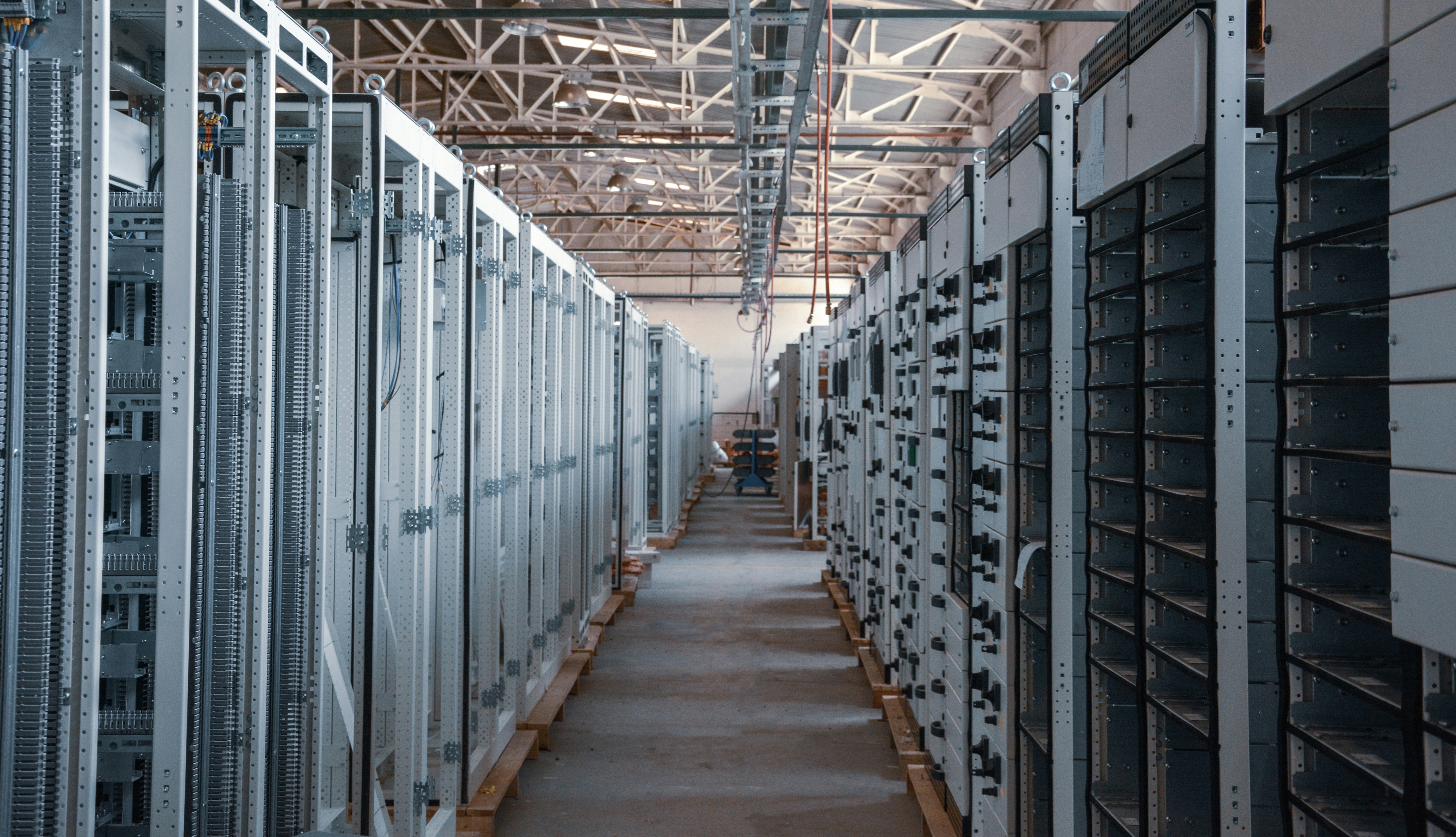
Data Center REITs: Real Estate at the Intersection of AI and Infrastructure
How the physical infrastructure behind artificial intelligence is creating a new generation of real estate investment opportunities.
Artificial intelligence is often discussed through the companies developing advanced processors, software platforms, and machine learning systems.
Yet behind every AI model, cloud computing service, and digital application is an enormous network of physical infrastructure.
Servers require secure buildings. Computing equipment requires electricity. High-performance processors generate substantial heat that must be managed through sophisticated cooling systems. Digital networks depend on fiber-optic connections, telecommunications equipment, and reliable power distribution.
These physical requirements have transformed data centers into one of the most strategically important categories of commercial real estate.
For long-term investors, data center real estate investment trusts, commonly known as data center REITs, provide an opportunity to participate in the expansion of digital infrastructure without directly owning semiconductor companies or developing artificial intelligence software.
However, rapid industry growth does not guarantee attractive shareholder returns.
Data center construction is expensive, electricity availability can constrain expansion, and technology companies may adjust their capital spending as market conditions change.
As investors prepare for 2027, understanding the economics of data center REITs is essential.
The investment opportunity is not simply in artificial intelligence growth. It is in identifying real estate businesses capable of converting digital infrastructure demand into sustainable cash flow and long-term shareholder value.
What Are Data Center REITs?
Data center REITs are real estate investment trusts that own, develop, and operate specialized facilities designed to support computing, data storage, telecommunications, and digital services.
Unlike traditional commercial properties, data centers require sophisticated infrastructure.
Typical features include:
- High-capacity electrical connections.
- Backup generators and power systems.
- Uninterruptible power supplies.
- Advanced cooling equipment.
- Fiber-optic network connectivity.
- Physical security and access controls.
- Fire detection and suppression systems.
- Redundant mechanical and electrical systems.
- Continuous operational monitoring.
These facilities support businesses that require reliable computing and network operations.
Customers may include cloud service providers, telecommunications companies, financial institutions, technology businesses, healthcare organizations, and government agencies.
According to the National Association of Real Estate Investment Trusts, data center REITs own and manage specialized properties that house the critical information technology infrastructure supporting the digital economy.
Their revenue generally comes from leasing space, power capacity, connectivity-related infrastructure, and associated services.
However, the precise mix of qualifying real estate income and operating service revenue varies by company and structure.
1. Why Artificial Intelligence Is Transforming Data Center Demand
Artificial intelligence requires substantial computing capacity.
Training large AI models involves processing enormous datasets using advanced computing systems.
Running those models for users, businesses, and automated applications also requires significant infrastructure.
This creates demand for data centers capable of supporting high-density computing equipment.
The Scale of Electricity Demand
The International Energy Agency's 2026 report, Key Questions on Energy and AI, projects that global data center electricity consumption will approximately double from 485 terawatthours in 2025 to 950 terawatthours by 2030.
The IEA expects AI-focused data center electricity consumption to grow considerably faster than overall data center demand.
Its central projection indicates that AI-focused data center electricity consumption could triple between 2025 and 2030.
These figures demonstrate the scale of the infrastructure expansion underway.
However, the IEA also identifies significant uncertainty surrounding AI adoption, efficiency improvements, financing conditions, and electricity availability.
Not every proposed data center project will necessarily be completed.
AI Is Not the Only Source of Demand
Data centers also support established digital activities.
These include:
- Cloud computing.
- Enterprise software.
- Financial transactions.
- Digital communications.
- Streaming services.
- E-commerce.
- Cybersecurity.
- Data storage and backup.
- Business continuity systems.
This broader customer base is important.
Data center REITs with diversified tenants and services may be less dependent on a single technology trend than companies focused exclusively on new AI development projects.
Nevertheless, customer concentration and exposure to large technology companies remain important investment considerations.
2. How Data Center REITs Generate Revenue
Data center REITs use several business models to generate income.
Understanding these models is essential because they influence customer relationships, capital requirements, and cash-flow stability.
Wholesale Data Centers
Wholesale data centers typically lease large amounts of computing space and power capacity to major customers.
These customers may include hyperscale cloud providers and large technology companies.
Wholesale leases can involve substantial contractual commitments.
However, a relatively small number of customers may account for a significant portion of revenue.
This can create concentration risk.
Colocation Data Centers
Colocation facilities allow multiple customers to rent smaller amounts of space, power, and connectivity within a shared facility.
Customers may install and operate their own servers while relying on the data center operator for the building's supporting infrastructure.
Colocation facilities can generate recurring revenue from numerous customers.
They may also benefit from additional services and network connectivity.
Interconnection Services
Interconnection allows businesses, networks, and cloud providers to exchange data through direct connections.
Highly interconnected data centers can become important digital network hubs.
These facilities may benefit from network effects.
As more businesses and network providers establish connections within a facility, the location can become increasingly valuable to other customers.
However, the economics of interconnection depend on competitive conditions, pricing, technology, and customer demand.
Build-to-Suit Development
Some data center operators develop facilities for specific customers.
These projects may be supported by long-term leasing agreements.
Preleasing can reduce certain development risks, but construction costs, financing requirements, permitting, and power delivery remain significant considerations.
3. The Importance of Electricity Availability
One of the most important factors influencing data center development is access to electricity.
A facility may have attractive land, excellent fiber connectivity, and strong customer demand.
But without sufficient power, the property may be unable to operate at its intended capacity.
Power Is Becoming a Competitive Advantage
Advanced AI computing systems require substantial electrical capacity.
The IEA's 2026 research indicates that power density in AI-focused data centers is increasing rapidly.
The report projects that by 2027, a single advanced server rack could have peak power demand comparable to that of approximately 65 households.
This illustrates why modern data centers require sophisticated electrical infrastructure.
Developers must coordinate with utilities, transmission operators, and equipment suppliers to secure reliable power.
Grid Connection Delays
Electric utilities may need to expand substations, transmission lines, and distribution infrastructure before supplying new data center campuses.
These projects can take years.
Transformers and other specialized electrical equipment may also have long procurement schedules.
Consequently, access to existing or committed power capacity can become an important competitive advantage for data center owners.
Evaluating Power Availability
Investors should distinguish among:
- Power capacity currently available.
- Power capacity contractually committed.
- Power capacity requiring utility upgrades.
- Capacity awaiting regulatory approvals.
- Capacity dependent on future generation projects.
A proposed development pipeline should not be treated as equivalent to completed, revenue-generating capacity.
The timing and cost of power delivery can materially influence investment returns.
4. Digital Realty and Equinix: Two Established Data Center REITs
Two prominent publicly traded companies in the sector are Digital Realty Trust and Equinix.
Both operate data center businesses, but their portfolios, customer relationships, and operating models differ.
Digital Realty Trust (NYSE: DLR)
Digital Realty owns, develops, and operates data center properties across major global markets.
Its business includes large-scale data center capacity, colocation, and interconnection services.
According to its 2025 Form 10-K filed with the SEC, Digital Realty's portfolio, including unconsolidated investments, contained approximately 57.6 million rentable square feet at year-end 2025.
The company also reported substantial development capacity and ongoing investment in additional data center facilities.
Its operations span multiple geographic markets, providing exposure to digital infrastructure demand across different regions.
However, global operations also introduce currency, regulatory, development, and financing risks.
Equinix (NASDAQ: EQIX)
Equinix is a global digital infrastructure company known for its colocation and interconnection ecosystem.
Its facilities support connections among enterprises, cloud platforms, telecommunications networks, and other digital service providers.
Equinix's business model places significant emphasis on interconnected digital ecosystems.
This can create opportunities for recurring customer relationships and additional services.
However, its operating model also requires ongoing investment in facilities, power systems, equipment, and global expansion.
Comparing the Investment Models
| Consideration | Digital Realty | Equinix |
|---|---|---|
| Primary exposure | Data center real estate and digital infrastructure | Colocation and interconnected digital infrastructure |
| Customer base | Hyperscale, enterprise, and other technology customers | Enterprise, network, cloud, and technology customers |
| Growth drivers | Capacity expansion, leasing, and connectivity | Colocation, interconnection, and global platform expansion |
| Capital requirements | Significant | Significant |
| Important risks | Development, financing, leasing, and power availability | Financing, operating costs, competition, and expansion |
| Investment evaluation | AFFO, leasing, occupancy, leverage, development returns | AFFO, recurring revenue, interconnection, leverage, expansion returns |
This comparison is descriptive rather than a recommendation to purchase either security.
Both companies require evaluation based on current financial results, valuation, balance sheet strength, and future investment requirements.
5. Why Funds From Operations Matter More Than Traditional Earnings
Real estate investment trusts are commonly evaluated using financial measures that differ from those used for conventional operating companies.
Traditional earnings per share can be affected by substantial depreciation charges.
Real estate depreciation may not always reflect the economic change in property values during a particular period.
For this reason, investors frequently examine funds from operations, or FFO.
Understanding Funds From Operations
The standard Nareit definition of FFO generally begins with net income and makes adjustments for real estate depreciation, amortization, and certain gains or losses related to property transactions, among other specified items.
FFO can help investors compare the operating performance of real estate businesses.
However, FFO is not equivalent to free cash flow.
It does not necessarily account for all recurring capital expenditures or financing requirements.
Adjusted Funds From Operations
Adjusted funds from operations, commonly called AFFO, attempts to provide a more refined view of recurring cash earnings.
Companies may adjust FFO for items such as:
- Recurring capital expenditures.
- Straight-line rent adjustments.
- Noncash compensation.
- Other noncash or nonrecurring items.
However, AFFO is not standardized across all REITs.
Different companies may use different definitions.
Investors should review management's calculations and reconcile them with reported financial statements.
Why AFFO Per Share Matters
AFFO per share can help investors evaluate whether growth benefits existing shareholders.
A REIT may increase total AFFO by developing additional properties.
But if the company issues substantial new shares to finance that growth, AFFO per share may increase more slowly.
For long-term investors, per-share economics are essential.
Growth in total assets or revenue does not automatically translate into shareholder wealth creation.
6. Dividend Investing and Data Center REITs
REITs are frequently associated with income investing.
Under applicable U.S. tax rules, a qualifying REIT generally must distribute at least 90% of its taxable income, subject to statutory adjustments, to maintain REIT status.
However, taxable income differs from accounting earnings and AFFO.
The 90% distribution requirement does not mean that a REIT must distribute 90% of its cash flow.
It also does not guarantee that a dividend will be maintained.
Evaluating Dividend Sustainability
For data center REITs, important considerations include:
- AFFO per share.
- Dividend payout relative to AFFO.
- Debt service requirements.
- Recurring maintenance expenditures.
- Development spending.
- Access to external financing.
- Customer credit quality.
- Leasing activity.
- Future refinancing obligations.
A REIT with substantial growth opportunities may retain more cash to support expansion, subject to its tax distribution requirements.
Another REIT may emphasize a higher current dividend.
Neither approach is automatically superior.
Dividend Yield vs. Dividend Growth
A higher dividend yield may appeal to income-focused investors.
However, dividend sustainability and growth potential are equally important.
Consider a hypothetical REIT paying an annual dividend of $4 per share.
If the dividend increases by 6% annually, it would reach approximately $7.16 per share after ten years.
This illustration assumes uninterrupted growth and excludes taxes, share price changes, and dividend reinvestment.
Actual dividends may increase, remain unchanged, or decline.
For long-term investors, a sustainable dividend supported by growing cash flow can be more valuable than an unusually high yield that cannot be maintained.
7. Data Center REITs Are Capital-Intensive Businesses
Data center development requires significant capital.
Costs can include:
- Land acquisition.
- Building construction.
- Electrical substations.
- Backup power equipment.
- Cooling infrastructure.
- Security systems.
- Fiber connectivity.
- Engineering and permitting.
- Specialized mechanical systems.
Advanced AI facilities may require additional investment in power distribution and cooling technology.
These requirements can create substantial barriers to entry.
However, they also increase financial risk.
The Importance of Development Returns
A data center REIT must generate sufficient income from a new property to justify its construction and financing costs.
A simplified measure is development yield.
Development Yield = Stabilized Annual Net Operating Income / Total Development Cost
For example, suppose a data center project costs $500 million and is expected to generate $40 million in annual stabilized net operating income.
Its illustrative development yield would be:
$40 million / $500 million = 8%.
However, this figure is not the same as a shareholder's investment return.
Financing costs, taxes, overhead, capital expenditures, leasing delays, and other expenses can affect the ultimate economics.
Investors should also compare development yields with the company's cost of capital.
A project that generates an 8% yield may create value when financed efficiently, but it could become unattractive if financing costs rise substantially.
8. Interest Rates and the Cost of Capital
Data center REITs are sensitive to financing conditions.
Large development projects often require combinations of retained cash flow, debt financing, equity issuance, and joint venture capital.
When interest rates increase, borrowing costs can rise.
Higher rates may also influence REIT valuations because investors compare dividend yields and expected returns with alternative income-producing investments.
Why Balance Sheet Strength Matters
Investors should examine:
- Net debt relative to adjusted EBITDA.
- Fixed-charge coverage.
- Debt maturity schedules.
- Weighted-average borrowing costs.
- Fixed-rate versus floating-rate debt.
- Available liquidity.
- Credit ratings.
- Equity issuance requirements.
A company with a strong balance sheet may have greater flexibility to pursue attractive development opportunities during periods of tighter credit.
A highly leveraged operator may face pressure to delay projects, issue equity, or sell assets.
Joint Ventures as a Financing Strategy
Some data center REITs partner with institutional investors to finance new developments.
Joint ventures can provide additional capital and reduce the amount of funding required from the REIT's own balance sheet.
However, they also introduce complexities involving ownership interests, management fees, control rights, and the distribution of project returns.
Investors should understand the economic interests retained by the REIT rather than focusing solely on the total size of a development project.
9. Tenant Concentration and Hyperscale Customers
Large technology companies are major participants in data center markets.
Cloud providers and AI developers may lease substantial amounts of computing capacity.
These relationships can support long-term revenue growth.
However, dependence on a limited number of customers can create risk.
The Benefits of Large Customers
Major technology companies may offer:
- Significant leasing commitments.
- Strong financial resources.
- Long-term contractual relationships.
- Demand for additional capacity.
- Opportunities for expansion across multiple locations.
The Risks of Concentration
Large customers may also possess substantial negotiating power.
They may seek lower pricing, flexible contractual terms, or the ability to develop facilities independently.
If a major customer reduces spending or changes its infrastructure strategy, a landlord may face leasing or redevelopment challenges.
Questions Investors Should Ask
- What percentage of revenue comes from the largest tenants?
- How long are existing lease commitments?
- Are leases supported by financially strong counterparties?
- What happens when major leases expire?
- Can facilities accommodate different customers?
- How much capital is required to adapt older facilities?
Long-term contracts can provide revenue visibility, but the quality of those contracts remains important.
10. AI Infrastructure and the Risk of Overbuilding
One of the central investment risks in data center real estate is the possibility that construction exceeds sustainable demand.
Technology investment cycles can be volatile.
Periods of strong demand may encourage developers to announce substantial new capacity.
If demand grows more slowly than expected, the industry could experience oversupply in certain markets.
Why Local Markets Matter
Data center supply and demand are highly location-dependent.
A facility in a market with constrained power availability and strong customer demand may have different economics from a project in a region with abundant speculative construction.
Important local factors include:
- Electricity availability.
- Utility pricing.
- Network connectivity.
- Land costs.
- Construction capacity.
- Tax incentives.
- Regulatory approvals.
- Customer demand.
- Existing and planned supply.
Investors should avoid treating global demand forecasts as guarantees of profitability for individual properties.
Technological Change
AI hardware and computing architectures are evolving rapidly.
Changes in server design, cooling requirements, computing efficiency, or network architecture could affect the suitability of existing facilities.
Some data centers may require substantial upgrades to remain competitive.
A building that was attractive for traditional enterprise computing may not be suitable for high-density AI workloads without additional investment.
This creates both opportunities and risks for specialized real estate operators.
11. Cooling Technology and Water Requirements
Advanced computing systems generate substantial heat.
Maintaining appropriate operating temperatures is essential for reliability and equipment performance.
Traditional data centers often rely on air-based cooling systems.
Higher-density AI facilities increasingly use liquid cooling and other specialized approaches.
Why Cooling Matters to Investors
Cooling systems influence:
- Construction costs.
- Operating expenses.
- Energy efficiency.
- Water consumption.
- Facility capacity.
- Equipment reliability.
- Maintenance requirements.
A facility with modern cooling capabilities may attract customers requiring high-density computing.
However, installing or upgrading these systems can require substantial capital.
Water and Environmental Considerations
Some cooling systems consume significant amounts of water.
Data center development can therefore raise concerns in regions facing water scarcity or infrastructure limitations.
Operators may respond through water-efficient technologies, alternative cooling designs, or location-specific engineering solutions.
Environmental considerations can influence permitting, community acceptance, and operating costs.
For investors, sustainability should be evaluated as an operational and financial issue rather than solely as a marketing objective.
12. How to Value Data Center REITs
Data center REITs are often valued using measures such as price to FFO, price to AFFO, net asset value, and expected cash-flow growth.
Each method provides a different perspective.
Price to AFFO
Price to AFFO compares the share price with annual adjusted funds from operations per share.
For example, assume a hypothetical data center REIT trades at $120 per share and generates $6 in annual AFFO per share.
Its price-to-AFFO multiple would be:
$120 / $6 = 20 times.
Whether that multiple is attractive depends on growth expectations, financing costs, risk, and comparable investments.
A higher multiple may be justified by strong long-term growth prospects.
However, elevated valuations also increase sensitivity to disappointing results.
AFFO Yield
AFFO yield is the inverse of the price-to-AFFO multiple.
Using the same example:
$6 / $120 = 5%.
This measure can help investors compare expected cash earnings with the purchase price.
However, AFFO yield is not equivalent to a guaranteed cash return or dividend yield.
Net Asset Value
Net asset value estimates the value of a REIT's underlying assets after liabilities.
For data center REITs, asset valuations may depend on:
- Property income.
- Capitalization rates.
- Market demand.
- Development potential.
- Power availability.
- Customer contracts.
- Financing conditions.
Because these assumptions can change, estimated net asset values are not precise or guaranteed.
Growth Must Be Evaluated Against Valuation
A business can experience strong revenue growth while delivering disappointing shareholder returns if its valuation declines.
For example, an investor purchasing a REIT at a very high AFFO multiple may experience losses even if AFFO per share continues increasing.
Long-term investment success depends on both business performance and the price paid.
13. Data Center REITs vs. Traditional REITs
Data center REITs differ from traditional real estate sectors in several important ways.
| Characteristic | Data Center REITs | Traditional Property REITs |
|---|---|---|
| Primary demand | Computing and digital services | Housing, retail, offices, storage, or other property uses |
| Specialized infrastructure | Extensive electrical and cooling systems | Varies by property type |
| Technology exposure | Significant | Generally lower |
| Power requirements | Often substantial | Usually less concentrated |
| Tenant concentration | Can include major technology customers | Varies by sector |
| Development costs | Frequently very high | Varies widely |
| Income | Rent and related qualifying revenue | Primarily property-related income |
| Key risks | Power, technology, capital spending, financing | Property demand, financing, occupancy |
Traditional REITs may offer exposure to housing, industrial logistics, healthcare, retail, or other property markets.
Data center REITs provide more direct exposure to the infrastructure supporting digital activity.
However, they can also introduce concentration in technology-related economic trends.
For diversified portfolios, this distinction matters.
14. Data Center REITs vs. Semiconductor Stocks
Investors seeking exposure to artificial intelligence often compare data center REITs with semiconductor companies.
Both may benefit from expanding computing demand.
However, their business models are fundamentally different.
Semiconductor companies design or manufacture processors and related technology.
Their earnings may depend on product innovation, market share, manufacturing capacity, and technology spending cycles.
Data center REITs generally own and operate the facilities that support computing equipment.
Their financial performance depends more directly on leasing, occupancy, rental rates, financing, and infrastructure investment.
Different Risks, Shared Economic Drivers
Semiconductor companies may face rapid technological obsolescence and product competition.
Data center REITs face physical infrastructure constraints, development costs, and real estate valuation risks.
However, both categories may be exposed to the same underlying trend in AI capital spending.
Owning both does not necessarily eliminate concentration risk.
Investors should assess the economic factors connecting their holdings.
15. Tax Considerations for Data Center REIT Investors
REIT distributions can receive different tax classifications.
Ordinary REIT dividends generally do not qualify for the preferential tax rates available to qualified corporate dividends.
However, eligible investors may qualify for a deduction on certain qualified REIT dividends under applicable federal tax rules.
Distributions may also include capital gain dividends or return-of-capital amounts.
The exact treatment depends on the REIT's tax reporting and the investor's circumstances.
Asset Location
Some investors consider holding REITs in tax-advantaged retirement accounts because of the potential ordinary-income taxation of distributions.
However, asset location decisions should account for:
- Expected total returns.
- Future tax rates.
- Retirement distribution rules.
- Liquidity requirements.
- Portfolio allocation.
- Estate planning objectives.
No single account structure is optimal for every investor.
Tax considerations should support sound investment decisions rather than determine them in isolation.
16. Building a Diversified AI Infrastructure Portfolio
Data center REITs represent one component of the broader AI infrastructure economy.
Artificial intelligence requires multiple interconnected systems.
Potential investment categories include:
| Investment Category | Economic Role | Important Risk |
|---|---|---|
| Data center REITs | Own and operate computing facilities | Valuation, financing, and leasing |
| Electric utilities | Supply electricity | Regulation and capital spending |
| Electrical equipment | Provide transformers and power systems | Manufacturing capacity and demand |
| Semiconductor companies | Supply computing processors | Competition and technology cycles |
| Fiber-optic networks | Connect computing facilities | Capital intensity and pricing |
| Cooling technology | Manage computing heat | Technology and competition |
| Natural gas infrastructure | Support energy transportation | Contracts, volumes, and regulation |
| Engineering and construction | Build facilities and networks | Project execution and margins |
These categories can provide different types of exposure.
However, many may remain sensitive to the same AI-related capital investment cycle.
Diversification should be based on underlying economic risks rather than the number of industries represented.
17. What Investors Should Watch in 2027
Several developments may influence the performance of data center REITs during 2027.
Leasing Demand
New leasing commitments can provide insight into customer demand and future revenue.
Power Availability
Access to electricity may determine how quickly development projects can become operational.
Development Costs
Construction inflation, specialized equipment shortages, and financing costs can influence project returns.
AFFO Per Share
Growth in AFFO per share can help investors assess whether expansion is creating value for existing shareholders.
Dividend Coverage
Sustainable distributions require sufficient recurring cash flow.
Tenant Concentration
Dependence on a small number of large technology companies can increase portfolio risk.
Interest Rates
Changes in financing costs can affect development economics and equity valuations.
AI Capital Spending
Technology companies may adjust their infrastructure budgets based on expected returns, competitive pressures, and financial conditions.
Technological Efficiency
Advances in computing efficiency may change the relationship between AI usage and required physical capacity.
Market Valuations
Strong business fundamentals do not guarantee attractive returns when share prices already reflect optimistic expectations.
These indicators should be evaluated together.
No single metric can reliably predict future REIT performance.
The Owls Nest Capital Perspective: Owning the Infrastructure Behind Innovation
At Owls Nest Capital, our investment philosophy emphasizes long-term ownership, sustainable income, disciplined valuation, and generational wealth preservation.
We believe artificial intelligence represents an important technological development with implications extending far beyond software and semiconductor manufacturing.
The physical infrastructure required to support AI may create investment opportunities across several established industries.
Data center REITs are particularly interesting because they connect real estate ownership with the growth of digital computing.
Their properties provide essential services to businesses that depend on reliable data processing, storage, and connectivity.
However, we believe investors should distinguish between an attractive long-term industry and an attractive investment at a particular valuation.
Data center development requires substantial capital.
Financing costs, electricity availability, construction schedules, and tenant commitments can all influence investment returns.
We therefore place importance on financial strength, recurring cash flow, disciplined capital allocation, and the ability to generate growth on a per-share basis.
Dividend sustainability also deserves careful consideration.
For long-term income investors, a growing dividend supported by durable cash flow may be more valuable than an elevated yield accompanied by financial stress.
We also recognize that data center REITs are part of a larger infrastructure ecosystem.
Utilities, natural gas transportation, electrical equipment, telecommunications, and cooling technology may all participate in the expansion of computing capacity.
Nevertheless, diversification remains essential.
An investment portfolio should not become excessively dependent on one technology trend, regardless of its long-term potential.
Our objective is not to predict which company will dominate artificial intelligence. It is to identify financially sound businesses capable of generating sustainable returns from the infrastructure that supports economic progress.
Looking Ahead: The Future of Data Center Real Estate
Data center real estate is becoming an increasingly important component of the global digital economy.
Artificial intelligence, cloud computing, enterprise technology, and digital communications continue to increase demand for reliable computing infrastructure.
The International Energy Agency's projections suggest that electricity consumption from data centers could roughly double by 2030.
However, the industry faces significant challenges.
Electricity availability, financing requirements, construction costs, and technological change may influence which projects are completed and which operators generate attractive returns.
For investors, the opportunity requires careful analysis.
The most successful data center REITs may be those capable of securing power, attracting financially strong tenants, controlling development costs, and maintaining disciplined balance sheets.
Growth alone is not sufficient.
The ultimate measure of investment success is whether expanding demand produces sustainable cash flow, increasing per-share value, and attractive long-term returns.
For family offices investing across generations, data center REITs may provide a way to participate in the development of digital infrastructure while maintaining exposure to income-producing real estate.
The future of artificial intelligence will be built on physical infrastructure. The investment challenge is identifying which owners of that infrastructure can convert demand into lasting shareholder value.
---
Frequently Asked Questions
What is a data center REIT?
A data center REIT is a real estate investment trust that owns, develops, or operates specialized properties used for computing, data storage, telecommunications, and digital services.
Why are data center REITs connected to artificial intelligence?
Artificial intelligence requires substantial computing capacity, electricity, cooling, and network connectivity. Data center REITs provide the physical facilities that support these requirements.
What are the largest publicly traded data center REITs?
Digital Realty Trust and Equinix are two prominent publicly traded U.S. data center REITs. Their market capitalizations and relative rankings change over time.
Do data center REITs pay dividends?
Yes, publicly traded data center REITs generally distribute dividends. However, payment amounts and growth rates vary, and dividends are not guaranteed.
Are data center REITs good long-term investments?
They may provide exposure to growing digital infrastructure demand and recurring real estate revenue. However, investment attractiveness depends on valuation, financial strength, cash flow, financing costs, and execution.
What is AFFO in a data center REIT?
Adjusted funds from operations is a non-GAAP measure intended to help evaluate recurring REIT cash earnings. Definitions vary by company, so investors should review the calculation and reconciliation.
Why is electricity availability important for data centers?
Data centers require reliable, high-capacity electrical connections. Limited grid capacity or delayed utility upgrades can postpone development and restrict revenue growth.
How do rising interest rates affect data center REITs?
Higher interest rates can increase financing costs, reduce development profitability, and pressure REIT valuations. The effect depends on debt structure, growth, and market conditions.
What are the biggest risks of investing in data center REITs?
Major risks include high capital requirements, tenant concentration, power constraints, construction delays, technological change, financing costs, and excessive valuations.
Are data center REITs different from traditional REITs?
Yes. Data center REITs own highly specialized facilities supporting digital infrastructure, while traditional REITs may focus on apartments, offices, retail properties, warehouses, or other real estate sectors.
Can data center REITs benefit from AI without owning AI stocks?
Yes. Data center REITs can earn revenue from leasing facilities and infrastructure to customers involved in AI and other computing activities. However, their financial performance remains exposed to broader technology investment conditions.
Should family offices include data center REITs in diversified portfolios?
Data center REITs may provide exposure to digital infrastructure and income-producing real estate. Their suitability depends on portfolio concentration, valuation, liquidity needs, risk tolerance, and long-term investment objectives.
---
Research and Sources
The following authoritative research publications and primary financial disclosures informed this article.
1. International Energy Agency, Key Questions on Energy and AI, 2026
Updated projections for global data center electricity consumption, AI infrastructure expansion, power density, and energy constraints.
2. International Energy Agency, Energy and AI, 2025
Analysis of AI computing demand, data center infrastructure, electricity generation, and energy investment requirements.
Overview of data center real estate investment trusts, specialized facilities, and the role of REITs in digital infrastructure.
4. Nareit, Data Center REITs Continue to Pique Investor Interest, July 2026
Industry analysis covering institutional demand, operating characteristics, and development opportunities.
5. Digital Realty Trust, 2025 Annual Report and Form 10-K
Primary financial disclosure covering Digital Realty's portfolio, development pipeline, business operations, and financial risks.
6. Digital Realty, Official Website
Company information on data center facilities, colocation, and interconnection services.
Company information on global digital infrastructure, colocation, and interconnection services.
8. U.S. Securities and Exchange Commission, REIT Investor Education
Explanation of real estate investment trusts and their investment characteristics.
9. Nareit, REITs and the New Economy
Research on specialized real estate supporting digital infrastructure and other emerging economic sectors.
---
Published by Owls Nest Capital | November 2026
Owls Nest Capital is a single-family office focused on long-term investing, capital preservation, sustainable income, and generational wealth.
Disclaimer: This article is provided for educational and informational purposes only and does not constitute personalized investment, financial, legal, or tax advice. Data center REITs and other real estate investments involve risks, including possible loss of principal, interest-rate sensitivity, financial leverage, technological change, tenant concentration, and development execution challenges. Dividends and distributions are not guaranteed. Forecasts and hypothetical examples are illustrative and should not be interpreted as assurances of future investment performance. References to specific companies are for educational purposes and do not constitute recommendations to purchase or sell securities. Readers should conduct independent research and consult qualified professionals before making investment decisions.